
What passkey wallets actually are
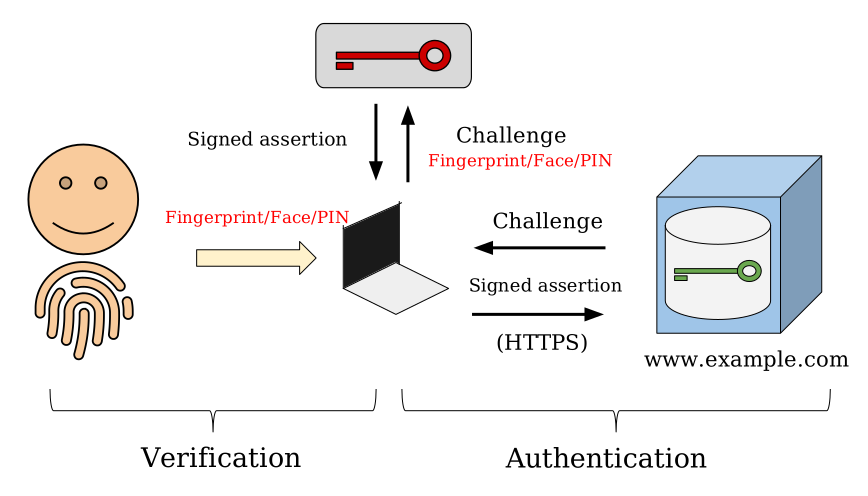
Passkey wallets shift the burden of security from the user to the device. Instead of memorizing a 12-word seed phrase, these wallets use the WebAuthn standard to generate private keys that are stored directly on your phone or computer’s secure enclave. The result is a system where biometrics—FaceID, fingerprint, or PIN—act as the signature, eliminating the risk of losing your recovery phrase or falling for phishing scams that steal it.
This architecture treats your device like a hardware security key. When you authorize a transaction, the private key never leaves the secure element on your device. It only signs the data. This approach has moved from experimental to standard in 2026, with major Solana wallets launching passkey-native accounts and Ethereum’s account abstraction frameworks adding native WebAuthn support.
The tradeoff is dependency on your hardware. If you lose your device and have no backup passkeys configured, access can be complicated. However, for most users, the reduction in user error far outweighs the friction of device management. The market is responding to this demand for simplicity, as evidenced by the steady performance of Ethereum, the primary settlement layer for these smart accounts.
Top passkey wallets compared
The 2026 landscape for passkey-native smart wallets is defined by a trade-off between consumer convenience and institutional-grade sovereignty. Three platforms dominate this space: Argent, Coinbase Smart Wallet, and Safe (Gnosis). Each implements passkey technology differently, affecting how you sign transactions, manage gas fees, and recover access if your device is lost.
Choosing the right wallet depends on whether you prioritize seamless social login, deep exchange integration, or multi-signature governance. Below is a direct comparison of their core capabilities.
| Wallet | Passkey Implementation | Gas Model | Recovery Options |
|---|---|---|---|
| Argent | Biometric/Device-bound, social recovery via guardians | ERC-4337 account abstraction, sponsored gas on mainnets | Guardian network (3/5 signatures), no seed phrase required |
| Coinbase Smart Wallet | WebAuthn for login and transaction signing, mobile-first UX | Paymaster sponsorship, gas-free transactions for many dApps | Email-based recovery, social login integration |
| Safe (Gnosis) | Passkey as one of multiple signers in a multisig setup | User pays gas or uses sponsored transactions via Safe{Wallet} API | Multi-signature threshold (e.g., 2/3), customizable signer roles |
Argent leads in user experience for non-custodial management, using account abstraction to sponsor gas fees and relying on a guardian network for recovery. This model removes the friction of gas management but requires trusting the guardian system if your device is compromised.
Coinbase Smart Wallet integrates passkeys directly into the exchange ecosystem, offering a streamlined login and signing process. Its recovery mechanisms are tied to your email and social accounts, which simplifies access but introduces central points of failure if those accounts are breached.
Safe (Gnosis) offers the most robust security for high-value assets by allowing passkeys to act as signers within a multi-signature framework. This approach requires multiple approvals for transactions, providing a buffer against single-point failures but adding complexity for everyday transactions.
The security tradeoffs of passkeys
Passkey wallets offer a frictionless entry point by replacing vulnerable seed phrases with device-bound biometrics. However, this convenience introduces a distinct set of risks centered on platform lock-in and single points of failure. When a wallet relies exclusively on a passkey hosted by a single provider, the user effectively delegates custody to that technology giant. If the provider changes its terms, deprecates the authentication method, or suffers a systemic outage, access to assets can be permanently severed. This dynamic shifts risk from the user’s ability to remember a secret to their dependency on corporate infrastructure.
The most critical vulnerability lies in the lack of robust recovery mechanisms. Traditional seed phrases allow for self-custody restoration across any compatible device. In contrast, passkey-only wallets often tie the private key inextricably to a specific ecosystem. Losing access to the primary device or account can result in irreversible asset loss. This fragility is particularly dangerous in the volatile crypto market, where liquidity and access are paramount. As noted in recent security analyses, passkey-only architectures face multiple failure modes, including platform lock-in and the inability to authorize transactions across different domains or agents.
To mitigate these risks, many advanced implementations are adopting Multi-Party Computation (MPC) hybrids. MPC splits the private key into shards distributed across multiple servers or devices. This approach retains the user-friendly authentication of passkeys while eliminating the single point of failure inherent in platform-hosted keys. By requiring consensus from multiple shards to sign a transaction, MPC ensures that no single provider can unilaterally freeze or lose access to funds. This hybrid model represents a more resilient standard for self-custody, balancing ease of use with institutional-grade security.
The choice between passkey-only and MPC-hybrid wallets is not merely technical; it is a strategic decision about who controls your assets. For users prioritizing absolute simplicity, passkeys are appealing. However, for those holding significant value, the risk of platform dependency outweighs the convenience. A hybrid approach offers a path forward that respects both security and usability, ensuring that your wallet remains yours, regardless of corporate policy changes.
WebAuthn adoption accelerates in 2026
The shift away from seed phrases is no longer theoretical; it is the dominant authentication standard for digital assets. As of May 2026, the FIDO Alliance reports 5 billion passkeys in active use worldwide, with 75% of consumers having enabled a passkey on at least one device. This scale demonstrates that biometric login has moved from experimental feature to the baseline expectation for secure wallet access.
This rapid adoption is driven by the inherent security advantages of WebAuthn over traditional mnemonic backups. Seed phrases remain a significant liability for the average user, often stored insecurely or lost entirely. Passkeys eliminate this single point of failure by anchoring authentication to the device’s secure enclave, using biometrics or screen locks instead of recoverable text strings.
For the crypto market, this transition reduces friction for new users while tightening security for existing holders. Wallet providers that fail to support passkeys are increasingly viewed as legacy options with unacceptable risk profiles. The market is consolidating around solutions that prioritize user experience without compromising on cryptographic security.
No comments yet. Be the first to share your thoughts!