
What is a passkey wallet?
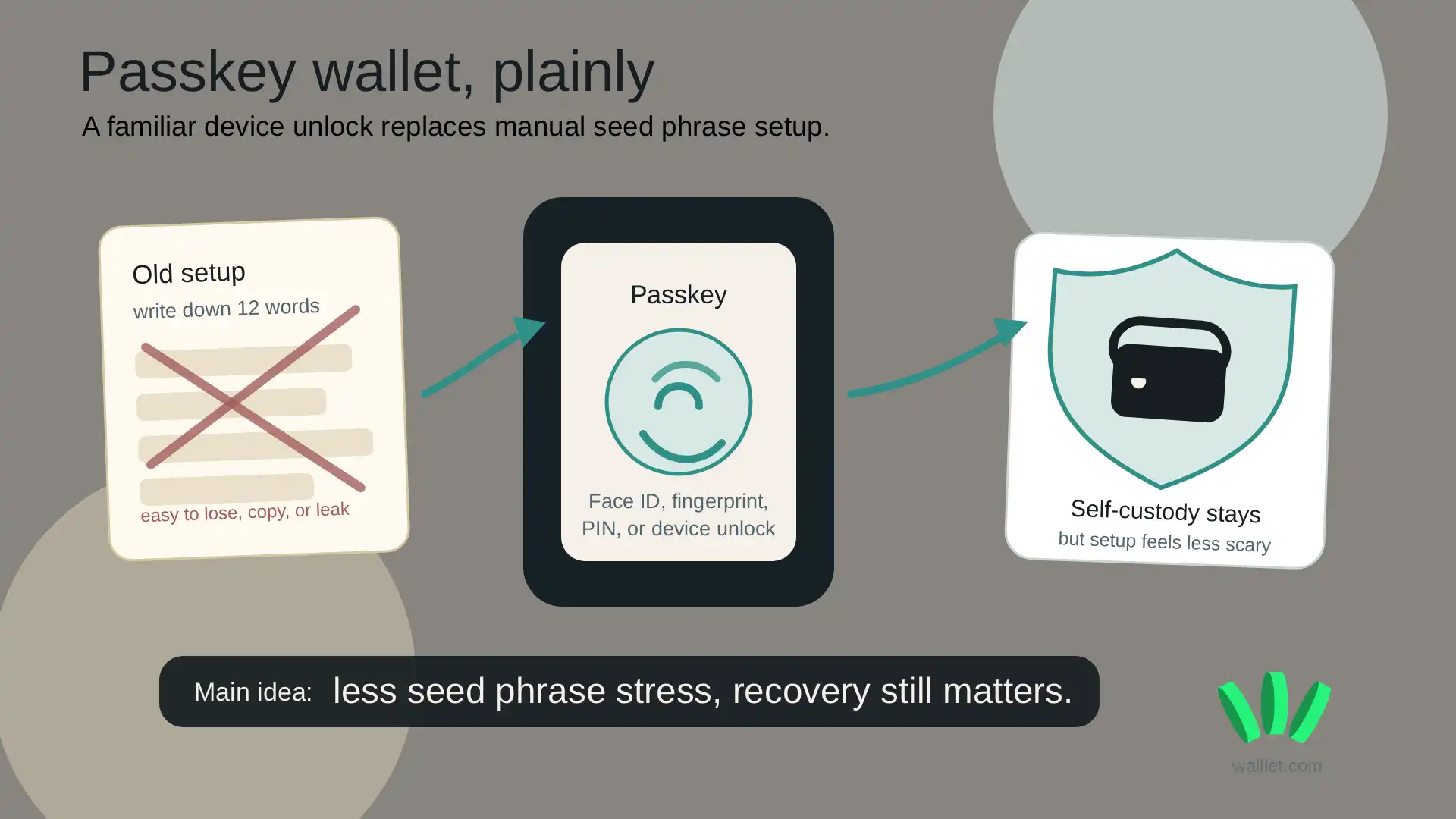
A passkey wallet is a self-custody tool that uses FIDO2 standards to manage digital assets. Instead of typing a password or recovering a seed phrase, it relies on device biometrics or hardware keys for authentication. This approach replaces shared secrets with public-key cryptography, offering stronger security than traditional password-based logins.
Major platforms like Exodus have adopted this model to simplify Web3 onboarding. By embedding passkey capabilities directly into their interfaces, they allow users to create wallets and execute transactions without managing complex cryptographic strings. This reduces friction for new users while maintaining the non-custodial nature of the assets.
| Feature | Traditional Seed Phrase Wallet | Passkey Wallet |
|---|---|---|
| Authentication | 12/24 word mnemonic phrase | Biometrics or device PIN |
| Key Storage | User-managed (offline or app) | Device secure enclave |
| Recovery | Manual seed backup | Account recovery options |
| Security Risk | Phishing, seed loss | Device compromise |
The primary tradeoff lies in recovery. If you lose access to your device, you cannot simply write down a seed phrase to restore your assets on a new phone. Passkey wallets require you to rely on account recovery mechanisms provided by the platform or device manufacturer. This centralizes risk slightly compared to pure self-custody, but it eliminates the most common cause of crypto loss: forgetting a seed phrase.
This model is best suited for users who prioritize ease of use and device security over absolute isolation. It bridges the gap between centralized convenience and decentralized control, making it a practical choice for everyday transactions rather than long-term cold storage.
Passkey wallet choices that change the plan
Moving to a passkey wallet is not just a change in login method; it is a fundamental shift in how you control your digital assets. While the convenience of biometric authentication and the elimination of seed phrases are compelling, the technology introduces specific structural tradeoffs that every crypto user must evaluate before committing funds.
The core tension lies between user experience and sovereignty. Traditional wallets place the burden of security entirely on the user, requiring meticulous backup of recovery phrases. Passkey wallets, by contrast, delegate key management to the operating system or a trusted cloud provider, significantly reducing the risk of human error but introducing reliance on third-party infrastructure.
Below is a comparison of the primary factors to consider when choosing a passkey-based solution for your Web3 activities.
| Factor | Passkey Wallet | Traditional Wallet |
|---|---|---|
| Recovery | OS or cloud provider backup | User-managed seed phrase |
| Device Loss | Re-authenticate via new device | Restore from seed phrase |
| Security Model | Biometric + public-key crypto | Secret knowledge (phrase) |
| Interoperability | Limited to supporting platforms | Universal across all wallets |
| Recovery Complexity | Low; follows account recovery | High; irreversible if lost |
Device and Ecosystem Lock-in
The most immediate tradeoff is platform dependency. Passkeys are tied to the hardware and operating system that created them. If you switch from an iPhone to an Android device, or if your primary laptop is damaged and your cloud backup is inaccessible, you may face significant hurdles in recovering your assets. Traditional seed phrases are device-agnostic; they work on any compatible wallet software, offering a layer of portability that passkey wallets currently lack. This makes traditional wallets preferable for users who frequently change devices or operate across fragmented ecosystems.
Recovery and Account Restitution
For many users, the ability to recover an account without technical expertise is paramount. Passkey wallets leverage existing account recovery flows, such as Apple ID or Google account restoration. This is far more user-friendly than managing a 12-24 word seed phrase, which requires perfect transcription and secure storage. However, this convenience comes with a caveat: if your primary identity provider (e.g., your Google account) is compromised, your crypto assets are potentially exposed. In traditional wallets, a compromised device is less critical if the seed phrase is stored separately offline.
Security and Key Storage
Passkey wallets store private keys in dedicated tamper-resistant hardware, such as Secure Enclaves, and require biometric verification for every transaction. This makes them highly resistant to phishing and remote hacking attempts. Traditional wallets rely on software-based key storage, which is more vulnerable to malware if the device is compromised. However, passkey wallets introduce a single point of failure: the identity provider. If the provider experiences an outage or a breach, access to your wallet may be temporarily or permanently restricted.
When to Choose a Passkey Wallet
Passkey wallets are ideal for users who prioritize ease of use and want to eliminate the complexity of seed phrase management. They are particularly well-suited for everyday transactions, Web3 onboarding, and users who are not technically inclined. If you value the convenience of biometric authentication and trust your primary identity provider, a passkey wallet offers a robust entry point into Web3.
However, if you are a high-net-worth individual, a power user, or someone who values absolute sovereignty over your assets, a traditional seed phrase wallet remains the safer choice. The ability to recover your assets independently of any third-party provider provides a level of resilience that passkey wallets cannot yet match.
How to choose the right passkey wallet
A passkey wallet replaces your password with a cryptographic key stored on your device, using biometrics or a PIN to sign transactions. This shift eliminates phishing risks associated with traditional password reuse, but it introduces a new dependency: your hardware. Choosing the right wallet depends on balancing security, accessibility, and ecosystem compatibility.
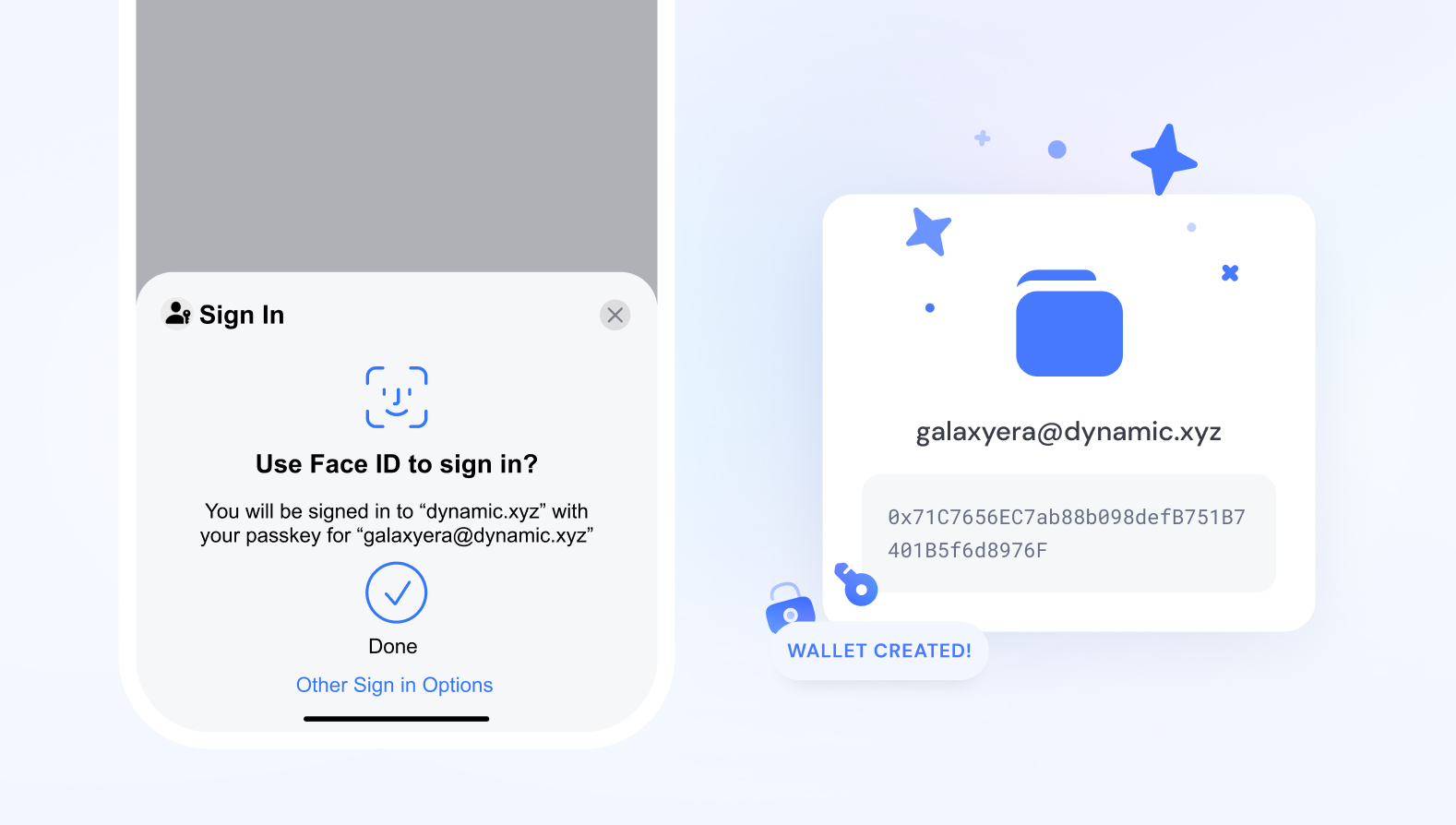
Ensure your device supports the WebAuthn standard. Most modern smartphones and laptops have this capability built-in. If you rely on older hardware or multiple devices, verify that the wallet provider supports cross-device synchronization or cloud backups to prevent lockouts.
Not all wallets support every blockchain or decentralized application (dApp). If you are an Ethereum user, look for wallets like Exodus that offer seamless integration with major dApps. For Solana or multi-chain users, verify that the passkey implementation is supported across your target networks before committing funds.
Passwords are easy to reset; lost keys are often irretrievable. Choose a wallet that offers a clear recovery pathway, such as a seed phrase backup or social recovery mechanisms. Test the recovery process in a sandbox environment with minimal funds to ensure you can regain access if your primary device is lost or stolen.
| Feature | Traditional Wallet | Passkey Wallet |
|---|---|---|
Tradeoffs by use case
The decision between a traditional wallet and a passkey wallet often comes down to your risk tolerance and technical comfort. Passkey wallets offer superior security for daily transactions, reducing the attack surface for phishing. However, they can be less flexible for advanced users who require granular control over key management or who operate across fragmented device ecosystems.
For institutional investors or high-net-worth individuals, the tradeoff may involve compliance requirements. Some regulatory frameworks still require explicit key custody arrangements that passkey implementations may not fully satisfy. In contrast, retail users benefit from the frictionless experience, treating their wallet like a bank card with a fingerprint.
Final decision
If your priority is security and ease of use for everyday transactions, a passkey wallet is the superior choice. It removes the burden of password management while providing robust protection against common attacks. However, if you require multi-device flexibility or operate in complex technical environments, a traditional seed-based wallet may still offer the necessary control and portability.
Spotting Weak Passkey Wallet Options
Not every wallet claiming "passkey support" delivers the security or speed promised. Many implementations rely on centralized identity providers that create single points of failure, negating the decentralized benefits of crypto. Before committing funds, verify whether the wallet truly uses local biometric keys or merely wraps a traditional account login.
Several popular platforms market "seamless" onboarding that actually stores private keys on their servers. This convenience comes at the cost of self-custody. If you cannot export your seed phrase or sign transactions locally, you are not using a true passkey wallet. Look for wallets that explicitly state they generate keys on-device and never transmit them to third parties.
Another common pitfall is the lack of cross-platform compatibility. Some wallets lock you into a specific ecosystem, making it difficult to access your assets if you switch devices or operating systems. A robust passkey wallet should support WebAuthn standards across iOS, Android, and desktop browsers without requiring proprietary plugins.
Finally, beware of wallets that claim passwordless experience but still require a secondary backup phrase stored in insecure locations. True passkey wallets use the device's secure enclave for recovery, eliminating the need for handwritten notes. Choose solutions that prioritize local security over marketing buzzwords.
Passkey wallet: what to check next
Passkeys are shifting how we secure digital assets, but they introduce new trade-offs compared to traditional seed phrases. Here are the practical answers to the most common concerns before you make the switch.
No comments yet. Be the first to share your thoughts!