
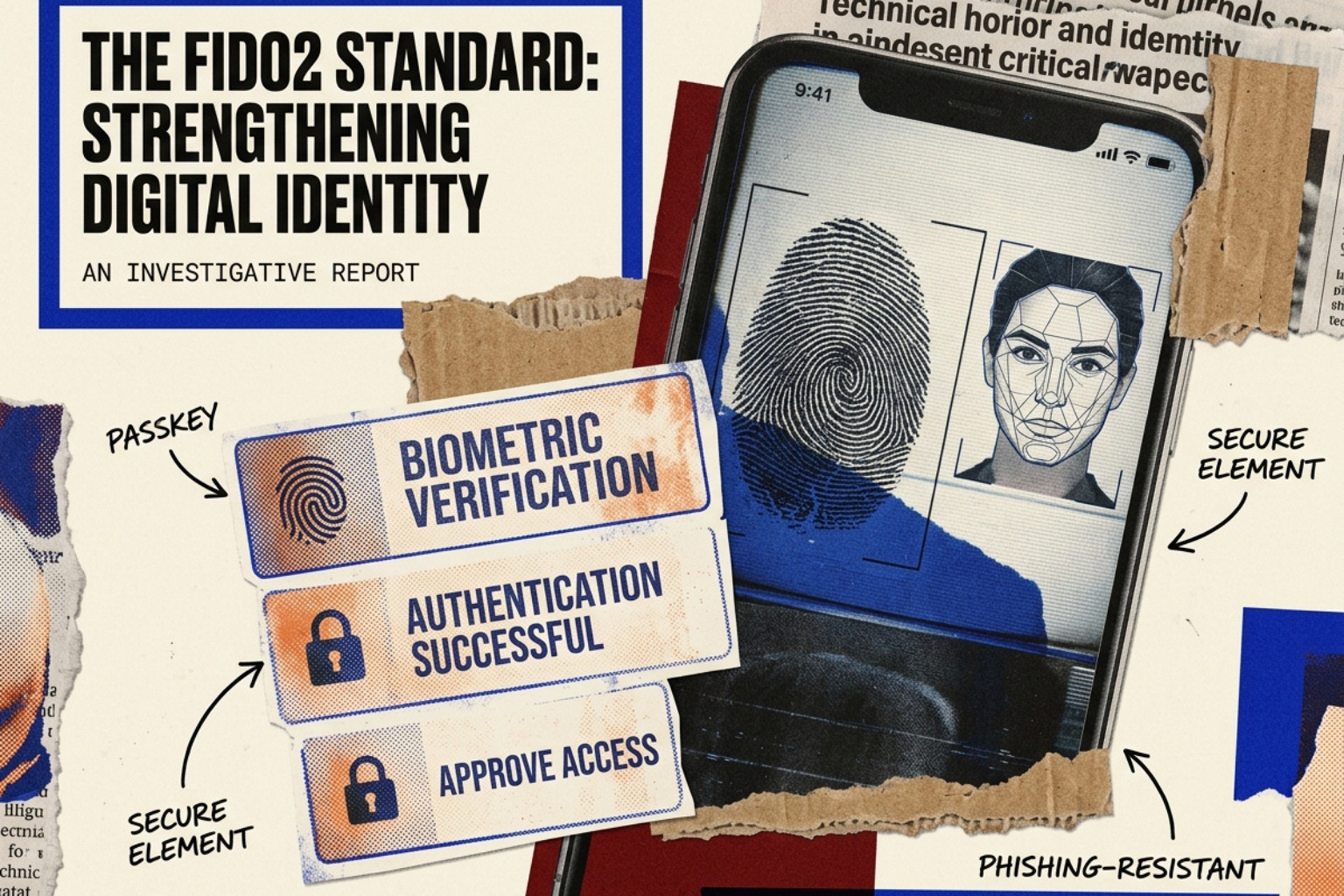
What a passkey wallet actually is
A passkey wallet replaces the traditional seed phrase with a cryptographic key pair stored in your device’s secure enclave. Instead of memorizing twelve words, you sign transactions using biometrics or a device PIN, leveraging the same WebAuthn standard that secures your bank logins. This approach shifts the burden of security from human memory to hardware-backed protection.
The technical foundation relies on Ethereum’s account abstraction (ERC-4337) combined with WebAuthn signature support. In this model, your wallet is a smart contract that validates signatures from your passkey rather than a private key stored in a file. Major Solana wallets launched passkey-native accounts in 2026, and Ethereum’s frameworks have since integrated this signature method, allowing for more flexible account recovery options than static seed phrases.
This architecture eliminates the risk of phishing sites stealing your seed phrase, as the private key never leaves your device. It also enables social recovery mechanisms, where trusted contacts can help restore access if you lose your device, a feature impossible with traditional non-custodial wallets. The result is a crypto experience that feels familiar to web users while maintaining the self-custody principles of blockchain.
How passkey wallets improve security
Passkey wallets shift the security model away from memorized secrets toward device-bound cryptography. Instead of guarding a recovery phrase or a hardware token, you authorize on-chain transactions using your device’s authenticator. This change eliminates the most common attack vectors in Web3: phishing and seed phrase theft.
Phishing resistance through domain binding
Traditional wallets and password-based systems are vulnerable to phishing because the user must manually enter credentials or approve transactions on deceptive sites. Passkeys solve this by binding the cryptographic private key to a specific domain and origin. If a malicious actor creates a fake login page, the passkey authenticator will refuse to sign the transaction because the domain does not match the original registration. This technical constraint makes phishing attacks largely ineffective against passkey-based Web3 wallets.
Local biometric authentication
Security in passkey wallets relies on the device’s secure enclave. The private key never leaves your device, meaning it cannot be intercepted by malware or keyloggers. Instead of typing a password, you use a biometric—such as Face ID, Touch ID, or a PIN—to authenticate the key for signing. This local authentication ensures that only the physical owner of the device can authorize transactions, adding a layer of identity verification that passwords simply cannot provide.
Eliminating seed phrase theft
The most significant security advantage of a passkey wallet is the elimination of seed phrases. Mnemonic phrases are often copied into insecure locations like text files, email drafts, or screenshots, making them easy targets for theft. With a passkey wallet, there is no mnemonic to copy, store, or lose. The cryptographic key pair is generated and stored natively within the device’s hardware security module, removing the human error associated with seed phrase management.
How passkey recovery compares to other methods
Passkey recovery relies on the WebAuthn standard to bind a wallet to a device-stored cryptographic credential. This approach syncs across a user's trusted devices, offering a familiar login experience similar to password managers. However, it introduces platform lock-in risks and domain binding complexities that can isolate users from their funds if the ecosystem shifts.
Social recovery and multisig solutions distribute custody among multiple parties, reducing single points of failure. Multi-Party Computation (MPC) hybrids further decentralize key shards, requiring a threshold of signatures to authorize transactions. While these methods offer robust redundancy, they often sacrifice the simplicity and speed that make passkeys attractive for everyday use.
The choice between these models depends on your tolerance for complexity versus convenience. Passkeys provide a seamless entry point but carry higher platform dependency. Social and multisig methods demand more setup but provide stronger guarantees against account loss or provider failure.
| Recovery Method | Custody Model | Complexity | Platform Dependency |
|---|---|---|---|
| Passkey | Device-bound | Low | High |
| Social Recovery | Distributed (Friends/Contacts) | Medium | Low |
| Multisig | Distributed (Co-signers) | High | Low |
| MPC Hybrid | Sharded Key | High | Low |
Tradeoffs in custody and complexity
When evaluating passkey recovery, consider the tradeoff between ease of use and long-term control. Passkey wallets are ideal for users who prioritize speed and familiarity, but they may struggle with gas costs and agent signing limitations. For high-value holdings, the distributed nature of social or multisig recovery provides a safety net that device-bound credentials cannot match.
MPC hybrids offer a middle ground, solving many of the failure modes associated with passkey-only wallets. By splitting key shares across devices or servers, they reduce the risk of total loss while maintaining a relatively smooth user experience. However, this added security comes at the cost of increased setup complexity and potential latency during transaction signing.
Ultimately, the best recovery method aligns with your specific risk profile. If you value simplicity and are comfortable with platform ecosystems, passkeys may suffice. For those seeking maximum control and resilience, distributed custody models remain the gold standard in 2026.
Platform lock-in, gas costs, and domain binding
The promise of a passkey wallet is seamless access, but the reality often involves significant friction. When you rely on a single provider for authentication, you trade convenience for control. The three biggest failure modes are platform lock-in, unexpected gas costs, and domain binding restrictions. Each one limits your ability to move freely in the crypto ecosystem.
Cross-platform lock-in
Passkeys are tethered to the ecosystem that issued them. If you generated your passkey on an iPhone, it lives in your iCloud Keychain. If you switch to an Android device, that key does not follow you. You cannot simply copy the private key because there is no private key to copy—it is held in a secure enclave.
This creates a hard barrier. You cannot access your wallet from a desktop browser or a different mobile OS without going through the original provider’s recovery flow. For many users, this is a dealbreaker. They want their assets to be platform-agnostic, not tied to Apple or Google. If your device breaks or you lose access to your account, recovering the passkey can be complex and slow. You are locked into the platform’s identity graph.
Gas cost penalties
Another hidden cost is the transaction fee. Passkey wallets often require a gas fee to sign transactions, even if the passkey itself is free. This is because the blockchain still needs to process the transaction, and the wallet provider may charge a premium for the convenience of passkey authentication.
In contrast, traditional wallets allow you to pay gas directly with your native token. Passkey wallets may force you to hold a specific token or pay a flat fee, which can be inefficient for small transactions. If you are moving small amounts of crypto, these fees can eat up your balance. It is a small but persistent tax on usability.
Domain binding and portability
Passkeys are often bound to specific domains. This means your passkey wallet might only work on the official website of the exchange or dApp. If you try to use your wallet on a third-party aggregator or a new dApp, the passkey may not be recognized.
This limits portability. You cannot use your passkey wallet across the entire web3 landscape. You are restricted to a walled garden. For developers, this means they must integrate passkey support explicitly. For users, it means their wallet is less useful outside of specific platforms. This fragmentation undermines the goal of a universal identity standard.
| Feature | Passkey Wallet | Traditional Wallet |
|---|---|---|
| Platform Lock-in | High (iOS/Android specific) | Low (Seed phrase portable) |
| Gas Costs | Often higher or fixed | Variable (Native token) |
| Domain Binding | Yes (Site-specific) | No (Universal) |
Which passkey wallet fits your needs
Choosing the right passkey wallet depends on balancing security, recovery, and technical comfort. The landscape has shifted significantly in 2026, with major Solana wallets launching passkey-native accounts and Ethereum’s account abstraction frameworks adding WebAuthn signature support. This evolution means that the "best" wallet is no longer a one-size-fits-all solution but a choice based on your specific risk profile.
Passkey-only wallets
These wallets rely entirely on biometric or device-based authentication via WebAuthn. They offer the highest security baseline because private keys never leave your device and are protected by hardware-backed secure enclaves. However, they present a significant trade-off: recovery is difficult. If you lose access to your device or its operating system, regaining access to your funds can be nearly impossible without a pre-configured recovery mechanism. This model suits users who prioritize convenience and security over easy recovery.
Hybrid wallets
Hybrid models combine passkey authentication with traditional seed phrase backups. This approach provides the best of both worlds: the ease of use and security of passkeys for daily transactions, and the safety net of a seed phrase for emergency recovery. While slightly more complex to set up, hybrid wallets are increasingly becoming the standard for serious crypto users. They mitigate the risk of total loss while maintaining a high security posture, making them ideal for those with moderate to high balances.
Traditional wallets with passkey support
Some traditional self-custody wallets now offer passkey support as an optional layer of security. These wallets retain full control over seed phrases and offer maximum flexibility and interoperability. They are best suited for advanced users who are comfortable with technical recovery processes and want the freedom to use their keys across a wide range of non-passkey compatible services. The security is strong, but the user experience remains more manual compared to native passkey solutions.
Common questions about passkey wallets
Passkey wallets are gaining traction as the Web3 industry shifts away from mnemonic phrases, but they still raise specific security and usability questions for new users.
No comments yet. Be the first to share your thoughts!