
What is a passkey wallet?
A passkey wallet is a Web3 smart account that replaces traditional seed phrases with biometric authentication methods like FaceID or TouchID. This technology shifts the burden of security from the user memorizing a complex string of words to the hardware and operating system of their device.
By using public-key cryptography, passkeys create a unique digital key pair for each account. The private key never leaves the device, stored in a secure enclave, while the public key interacts with the blockchain. This setup eliminates the need for passwords and recovery phrases, which are common points of failure in traditional crypto wallets.
The primary advantage is frictionless access. Users can sign transactions with a simple fingerprint or face scan, making Web3 interactions as easy as unlocking a smartphone. This approach significantly reduces the risk of phishing attacks, as the private key cannot be guessed or reused across different platforms.
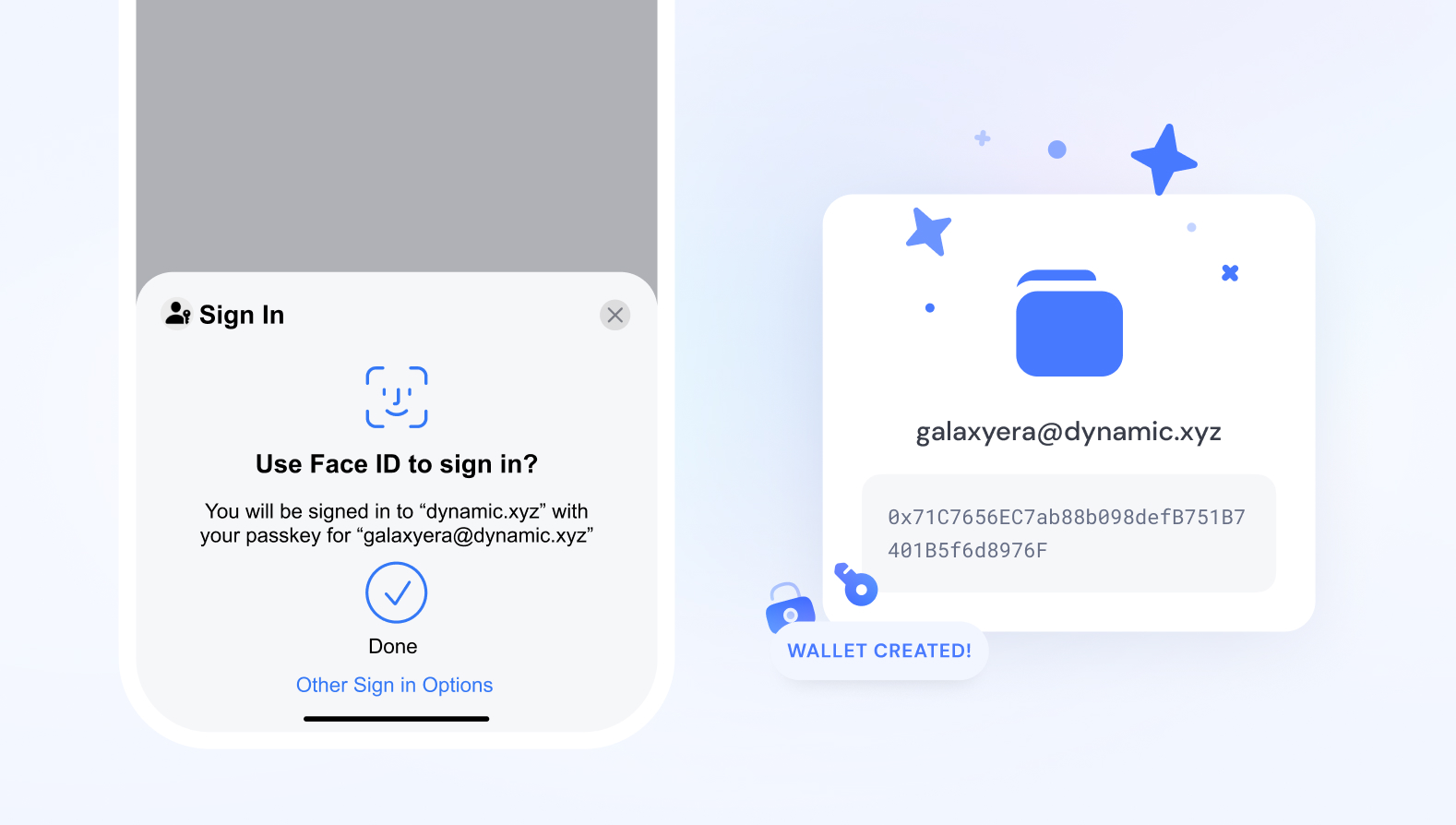
While this method offers stronger protection against online threats, it ties account access to the physical device. If a user loses their phone, recovery can be more complex than writing down a seed phrase, requiring reliance on the device manufacturer's ecosystem for restoration.
Biometric Authentication Secures Assets
Passkey wallets shift the burden of security from memory to hardware. Instead of relying on a user to remember or write down a 12-word seed phrase, the system generates a P-256 cryptographic key pair. The private key never leaves your device. It is stored in a dedicated, tamper-resistant secure enclave, a hardware component found in modern smartphones and laptops that is designed to resist physical extraction and software attacks.
Every time you sign a transaction, the enclave requires a biometric check. Your fingerprint or facial recognition acts as the final gate. Without this local verification, the private key remains locked away. This mechanism eliminates the most common cause of crypto loss: human error. You cannot lose a key you do not have to remember, and you cannot accidentally share it via a phishing link because the key never leaves your device to be intercepted.
The result is a security model that is both simpler and stronger. Traditional passwords are vulnerable to reuse across sites and susceptible to social engineering. Passkeys are unique to each application and bound to the hardware that protects them. This creates a barrier that is difficult for attackers to breach without physically stealing your unlocked device.
Top passkey wallet providers in 2026
The passkey wallet market has shifted from experimental prototypes to polished consumer products. Three implementations stand out for their balance of security, ease of use, and ecosystem support: Exodus, Coinbase Base, and Eco.
Each provider approaches the technology differently. Exodus focuses on embedding passkeys into a familiar multi-chain interface. Coinbase Base leverages its infrastructure to offer a streamlined, branded entry point. Eco treats the passkey as the sole identity layer, stripping away traditional seed phrases entirely.
Exodus Passkey Wallet
Exodus has integrated passkey functionality directly into its existing wallet architecture. This approach allows users to create a wallet in one click without managing a seed phrase or email login. The wallet can be used as a standalone application or embedded into third-party platforms, providing a frictionless onboarding experience for new users.
The implementation supports multiple chains, maintaining Exodus’s multi-asset model while replacing the private key management with biometric authentication. This reduces the cognitive load for beginners who might otherwise struggle with seed phrase backup procedures.
Coinbase Base Passkey
Coinbase Base offers a passkey wallet that is tightly integrated with the Base blockchain ecosystem. This solution is designed for users who want a simple, secure entry point into Web3 without the complexity of traditional wallet setups. By using passkeys, Coinbase eliminates the need for seed phrases, relying instead on the device’s built-in security hardware.
This provider is particularly effective for users already within the Coinbase ecosystem, as it streamlines the transition from centralized finance to decentralized applications. The onboarding process is minimal, requiring only biometric verification to establish the wallet identity.
Eco Passkey Wallet
Eco takes a more radical approach by making the passkey the exclusive identity mechanism. A passkey wallet from Eco stores a P-256 key in dedicated tamper-resistant hardware and gates every signature behind biometrics. This design removes the seed phrase entirely, shifting the recovery model to device-based authentication and social recovery options.
This implementation is ideal for users who prioritize security and simplicity over multi-chain flexibility. By anchoring the wallet in hardware-backed passkeys, Eco ensures that even if the device is lost, the user can recover access through their designated social contacts or backup methods, rather than a static string of words.
Comparison of Passkey Wallet Providers
The following table compares the key features of these three providers, focusing on onboarding friction, supported chains, and recovery options.
| Provider | Seed Phrase | Supported Chains | Recovery Method |
|---|---|---|---|
| Exodus | No | Multi-chain (BTC, ETH, etc.) | Device-based / Social (varies) |
| Coinbase Base | No | Base Network | Device-based / Coinbase Account |
| Eco | No | Multi-chain | Social Recovery / Device |
The trade-offs of passwordless crypto wallets
Passkey wallets shift the security burden from your memory to your device. While this eliminates the risk of seed phrase theft, it introduces new vulnerabilities centered on physical access and platform fragmentation. Understanding these limitations is essential before migrating your primary assets.
Device dependency and physical access
Passkeys rely on the WebAuthn standard, which ties cryptographic authentication to a specific hardware token or biometric sensor. This works beautifully when your phone is in your pocket, but it creates a single point of failure if that device is compromised. If an attacker gains physical access to your unlocked device, they can often bypass the biometric lock to approve transactions, effectively stealing your wallet without needing your password. This is distinct from traditional seed phrases, which can be stored offline and remain secure even if your computer is hacked. As noted by security researchers, "device access still matters" because authentication relies on the device being trusted at that exact moment.
Recovery complexity
Recovering a passkey wallet is significantly more complex than restoring a standard mnemonic phrase. Most implementations tie the passkey to your operating system account (e.g., Apple ID or Google Account). If you lose access to that account, or if your device is lost and you cannot verify your identity through the original provider, recovering your crypto assets can be nearly impossible. Unlike a 12-word seed phrase that works across any compatible wallet app, passkey recovery often requires the original device or a verified backup method provided by the specific wallet vendor. This fragility makes it risky to store long-term savings or high-value assets solely in a passkey-dependent wallet.
Varying DApp support
The WebAuthn standard is widely adopted for login pages, but its integration into decentralized applications (DApps) is still uneven. Many DeFi protocols and NFT marketplaces have not yet updated their smart contracts or frontend interfaces to recognize and process passkey-based signatures. This means you might find yourself locked out of certain platforms or forced to use a secondary, less secure wallet for specific transactions. Until the ecosystem achieves broader standardization, passkeys remain best suited for onboarding new users and securing everyday transactions rather than serving as the sole key for your entire crypto portfolio.
No comments yet. Be the first to share your thoughts!