
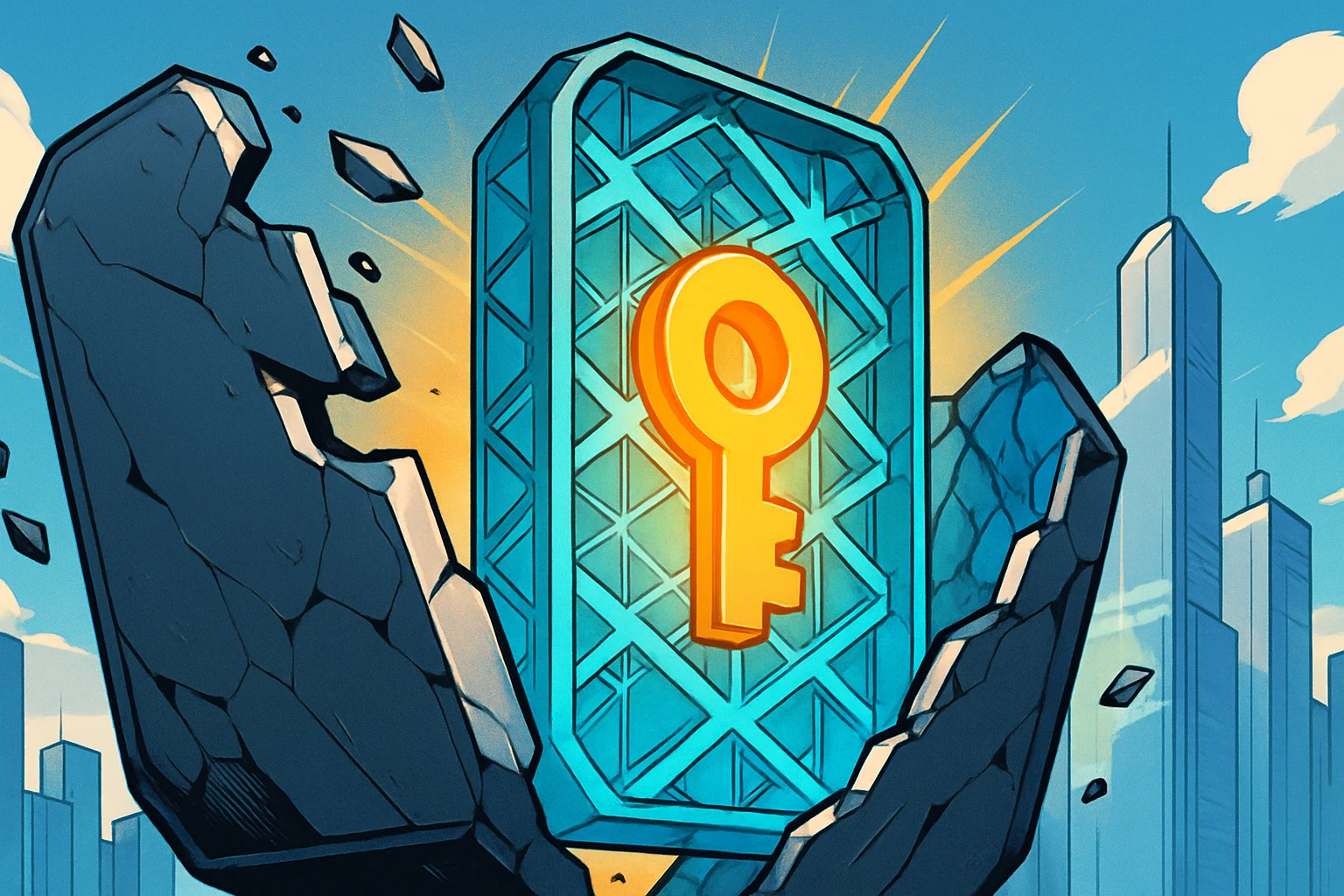
What defines a passkey wallet
A passkey wallet is a Web3 smart account that replaces traditional mnemonic seed phrases with biometric authentication methods like FaceID or TouchID. This architecture shifts the burden of security from the user, who must memorize and protect long strings of words, to the device itself, which holds the private key in a secure enclave.
Unlike legacy models where a compromised seed phrase grants total access to assets, a passkey wallet uses public-key cryptography. The private key never leaves the device, making it immune to phishing, guessing, or remote breaches. You authenticate with your fingerprint or face, and the device signs transactions locally without exposing the key.
This shift simplifies blockchain interactions while strengthening security. Users no longer need to write down recovery phrases or worry about digital paper wallets. Instead, they rely on a method of authentication they already trust, providing a more polished and secure onboarding process for the next generation of crypto users.
Biometric authentication trends in 2026
The shift from passwords to biometrics is no longer a speculative future; it is the current standard for the passkey wallet 2026 ecosystem. According to FIDO Alliance CEO Andrew Shikiar, over 4 billion passkeys are now securing sign-ins globally. This massive scale demonstrates that biometric authentication has moved past the adoption curve and into mainstream utility, replacing complex credential management with simple, device-based identity verification.
In the Web3 space, this momentum is driving the creation of native passkey wallets. These wallets simplify blockchain interactions by leveraging existing trust in device biometrics, such as Face ID or fingerprint scans. This approach sharpens user experience and strengthens security, allowing users to interact with decentralized applications without the friction of managing private keys or remembering complex passwords.
The industry is also seeing automatic upgrades to credential exchange standards, making it easier for platforms to adopt passwordless authentication. As these standards mature, the reliance on traditional passwords continues to decline, positioning biometric-based passkeys as the foundational layer for digital identity in 2026.
Passkey wallet 2026 vs. traditional seed phrases
The shift to biometric authentication is replacing the 12- or 24-word mnemonic phrase for many users, but the trade-offs are distinct. A traditional seed phrase wallet relies on a human-readable backup that you store offline. A passkey wallet ties your private key to your device’s secure enclave, authenticated by Face ID, Touch ID, or a PIN.
The primary advantage of the passkey approach is friction reduction. You no longer need to manually transcribe words or store physical paper in a fireproof safe. Authentication becomes as simple as unlocking your phone. However, this convenience introduces platform dependency. If your device is lost or the operating system updates in a way that breaks compatibility, access can become complicated without a manual backup.
Security models also diverge. Seed phrases are vulnerable to physical theft, phishing, and human error—writing them down on insecure paper or sharing them digitally. Passkeys are resistant to phishing because they are cryptographically bound to the specific domain or app. Yet, they are vulnerable to local device compromise or platform lock-in if the vendor changes its policy.
The table below compares the core mechanics of both approaches.
| Feature | Passkey Wallet | Seed Phrase Wallet |
|---|---|---|
| Authentication | Biometrics or device PIN | Manual 12-24 word entry |
| Recovery | Device-dependent; no manual backup | Offline paper or metal backup |
| Phishing Resistance | High (domain-bound cryptography) | Low (manual entry required) |
| Portability | Limited to specific ecosystems | Universal across all wallets |
| Device Loss | Risk of total loss if no sync | Safe if backup is stored securely |
For most casual users in 2026, the passkey wallet offers a smoother experience that mirrors standard app usage. For long-term storage or high-value holdings, the seed phrase remains the gold standard for sovereignty, provided you can manage the physical backup securely.
Why passkey-only wallets fail
The promise of a passkey wallet 2026 model is frictionless, passwordless authentication. In practice, relying exclusively on device-bound passkeys introduces structural risks that can lock users out of their assets or penalize them financially. While biometrics simplify onboarding, they create single points of failure and platform dependencies that traditional seed phrases do not.
Platform lock-in
Passkeys are often tied to specific ecosystems, such as Apple’s iCloud Keychain or Google’s password manager. If you switch from an iPhone to an Android device, you may lose access to the private keys stored within the original device’s secure enclave. This creates a vendor lock-in scenario where your identity and assets are held hostage by the operating system you chose. Unlike a seed phrase, which is portable across any compliant wallet, a device-bound passkey is not easily migratable.
Gas cost penalties
Using passkeys for on-chain transactions can introduce unexpected friction. Many passkey implementations require a "relay" or "smart account" abstraction to handle the signature verification on-chain. This process often involves paying gas fees for every interaction, even for simple contract calls. In contrast, traditional wallet signatures are often free to verify in off-chain contexts. For high-frequency traders or users on high-gas networks, these accumulated costs can erode portfolio value significantly.
Domain binding limitations
Passkeys are bound to the origin domain (e.g., app.yourwallet.com). If a service changes its domain, migrates to a subdomain, or is compromised, the existing passkey may become invalid or unusable. This rigidity conflicts with the decentralized nature of blockchain, where interoperability and portability are essential. Users may find themselves unable to access their wallets if the service provider undergoes a rebranding or technical migration without a clear offboarding path.
The 2026 Market Outlook
The passkey wallet 2026 landscape is defined by a decisive shift from traditional credentials to biometric standards. FIDO Alliance CEO Andrew Shikiar projects that over 4 billion passkeys are now securing sign-ins globally, signaling that the technology has moved beyond early adoption into mainstream infrastructure. This volume underscores a critical inflection point where user convenience directly drives security adoption.
For Web3, this trajectory is transformative. Passkeys simplify blockchain interactions by replacing complex seed phrases with device-based authentication methods like Face ID. This reduction in friction sharpens the user experience, making crypto wallets more accessible to institutional and retail users alike. The elegance of the technology lies in its ability to merge superior security with a seamless onboarding process.
As institutional security standards evolve, the passkey wallet 2026 model will likely become the default for digital asset management. The combination of biometric verification and cryptographic strength offers a robust defense against phishing and credential theft. This shift is not merely technical; it represents a fundamental rethinking of how identity is managed in a decentralized economy.
Common questions about passkey wallets
Understanding how passkey wallets function and why they are replacing traditional credentials is essential for navigating the 2026 crypto landscape. These systems rely on device-based biometrics rather than memorized secrets.
No comments yet. Be the first to share your thoughts!