
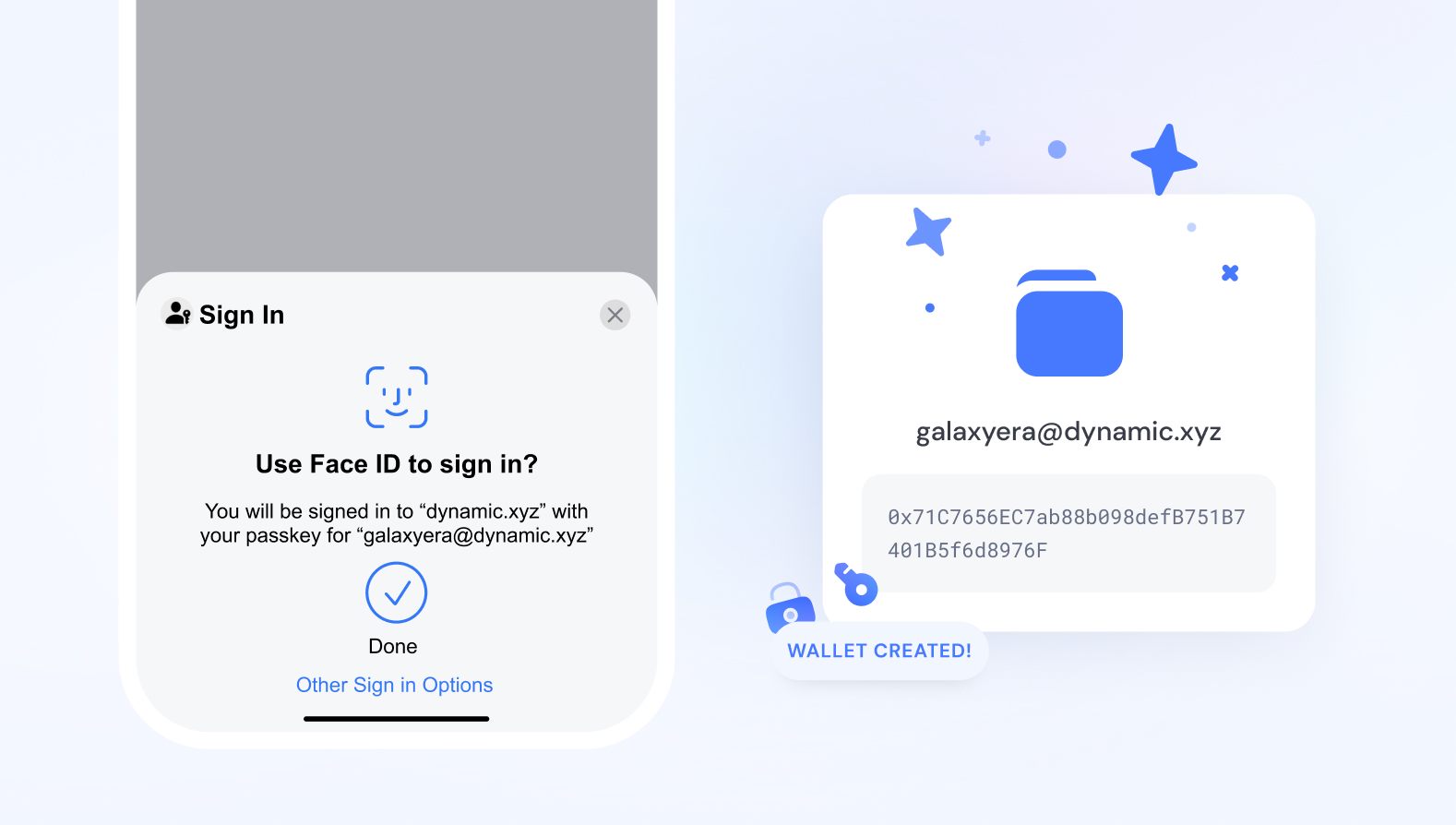
Defining the passkey wallet standard
A passkey wallet is a digital asset interface that replaces traditional seed phrases and passwords with biometric authentication protocols. Instead of memorizing a twelve-word recovery phrase, users sign transactions using public-key cryptography anchored in their device’s hardware. This shift moves the burden of security from human memory to the device’s secure enclave, aligning cryptocurrency access with the standards used by major financial institutions and operating systems.
The underlying technology relies on the WebAuthn standard, which allows the wallet to generate a unique key pair stored locally on the device. Touch ID or Face ID acts as the gatekeeper, verifying the user’s identity before allowing the private key to sign a transaction. Because the private key never leaves the device, the attack surface for remote theft is significantly reduced. As noted by Chainlink, this approach simplifies onboarding while improving security by removing the single point of failure inherent in seed-phrase management.
This distinction is critical because seed-phrase wallets place the entire responsibility of key management on the user. A lost or exposed recovery phrase results in permanent loss of assets or total compromise. Passkey wallets mitigate this risk by tying the key to a specific, authenticated device. If the device is lost, the user can often recover access through established account recovery flows, rather than relying on a static string of words that may have been written down or stored insecurely.
The move toward passkeys represents a structural change in how digital ownership is handled. By integrating with existing operating system frameworks, these wallets offer a more robust security model that does not require users to become their own security experts. This alignment with mainstream authentication standards is what distinguishes the passkey wallet from its predecessors.
How passkey wallets secure your keys
Passkey wallets replace the traditional seed phrase with a cryptographic key pair generated locally on your device. Unlike legacy wallets where a 12-word mnemonic is stored in plain text or copied into insecure notes apps, passkeys rely on the WebAuthn standard to bind your private key to a secure hardware module. This module, found in modern smartphones and computers, ensures the private key never leaves the device and cannot be exported or copied.
The mechanism is straightforward but effective. When you create a wallet, your device generates a public-private key pair. The private key is encrypted and stored within the device’s secure enclave, protected by biometric authentication like FaceID or TouchID. The public key is then registered with the blockchain network. To sign a transaction, your device verifies your biometric identity, decrypts the private key in memory, signs the transaction, and immediately discards it. This process eliminates the single point of failure that has plagued the industry: the seed phrase.
This architecture directly addresses the two most common vectors for wallet theft: phishing and physical key loss. Phishing attacks typically trick users into entering their seed phrase into a fake website. Since passkey wallets do not use seed phrases, this attack vector is neutralized. The private key is never typed, copied, or displayed. Similarly, losing a seed phrase means losing access forever. With a passkey wallet, access is tied to your device and biometrics. If you lose your phone, you can often recover access through your cloud provider’s secure backup of the authentication credential, which is far more resilient than a handwritten piece of paper.
The shift from seed phrases to hardware-backed passkeys represents a fundamental change in how self-custody works. It moves security from the user’s memory and physical storage to the device’s hardware and operating system. This reduces the cognitive load on the user while significantly raising the bar for attackers. Instead of needing to steal a piece of paper or trick a user into typing a password, an attacker would need to physically compromise the device’s secure enclave or bypass biometric authentication, both of which are substantially more difficult.
Leading implementations in 2026
The shift from seed phrases to biometric authentication is no longer theoretical. Major infrastructure providers and exchanges have integrated passkey technology into their core wallet products, moving beyond experimental phases to production-ready solutions. This adoption signals a structural change in how digital assets are secured and accessed.
Coinbase: Base Network Integration
Coinbase has embedded passkey support directly into its Base smart accounts. This implementation allows users to sign transactions using Face ID or Touch ID on their mobile devices, eliminating the need to manually copy and store 12-word recovery phrases. By leveraging WebAuthn, the private key remains stored in the device’s secure enclave, reducing the attack surface associated with phishing and seed phrase theft. This approach aligns with the broader industry move toward account abstraction, where the user experience is decoupled from the underlying cryptographic complexity.
Circle: Modular Wallet Architecture
Circle’s documentation outlines a modular approach to passkey wallets, positioning the passkey as the default signer for smart accounts. This architecture separates the authentication layer from the asset management layer. The key pair is generated on the device and stored in a hardware-protected module, ensuring that the private key never leaves the user’s physical device. This design allows for greater flexibility in recovery options and cross-device synchronization without compromising security. It represents a significant step toward interoperable, user-controlled financial identity.
Helius: Solana Ecosystem Adoption
In the Solana ecosystem, providers like Helius are integrating passkeys to simplify onboarding for new users. By replacing traditional passwords with biometric authentication, these wallets reduce the friction associated with creating and managing new accounts. The private key is stored in a secure hardware module on the user’s device, ensuring that even if the device is lost, the assets remain protected through biometric verification. This implementation highlights the potential for passkeys to drive mass adoption by making crypto wallets as easy to use as everyday banking apps.
| Provider | Chain Support | Authentication Method | Recovery Option |
|---|---|---|---|
| Coinbase | Base (EVM) | Face ID / Touch ID | Social recovery |
| Circle | Multi-chain | WebAuthn / Biometric | Modular key management |
| Helius | Solana | Biometric | Device-based secure enclave |
The convergence of these implementations suggests that passkey wallets are becoming the standard for secure, user-friendly crypto interactions. As more providers adopt this technology, the fragmentation of security standards will likely decrease, making it easier for users to manage their assets across different platforms and chains.
Adoption metrics and market impact
The transition from seed phrases to biometric authentication is no longer a theoretical exercise in user experience design; it is a structural correction to a failing security model. Traditional seed-phrase wallets rely on human memory for cryptographic security, a mechanism that has proven catastrophically fragile. The market impact of this fragility is quantifiable: every lost or phished seed phrase represents irreversible capital loss and erodes trust in digital asset custody. Passkey wallets, leveraging WebAuthn and account abstraction, address this by tying wallet access to the device’s hardware security module rather than a memorized string of words.
Adoption metrics for passkey-enabled wallets are accelerating as major infrastructure providers integrate WebAuthn support. The Passkeys Foundation notes that this technology offers a superior user experience that is simple to deploy, directly correlating with higher user retention rates. When onboarding friction is reduced from a multi-step mnemonic backup process to a single biometric scan, conversion rates for new wallet users increase significantly. This shift is not merely about convenience; it is about reducing the attack surface. By eliminating the seed phrase, the primary vector for social engineering attacks is removed from the user’s daily workflow.
The market impact extends beyond individual user retention to institutional confidence. Financial institutions and regulated entities are increasingly wary of self-custody solutions that place the entire burden of security on the user. Passkey wallets offer a middle ground: non-custodial control with custodial-grade security mechanisms inherent in modern operating systems. This alignment with existing enterprise security standards facilitates broader adoption in sectors where regulatory compliance requires robust audit trails and recovery mechanisms that seed phrases cannot reliably provide. The growth trajectory of passkey adoption is thus driven by a convergence of improved usability and hardened security, marking a decisive shift in how digital assets are accessed and secured.
No comments yet. Be the first to share your thoughts!