
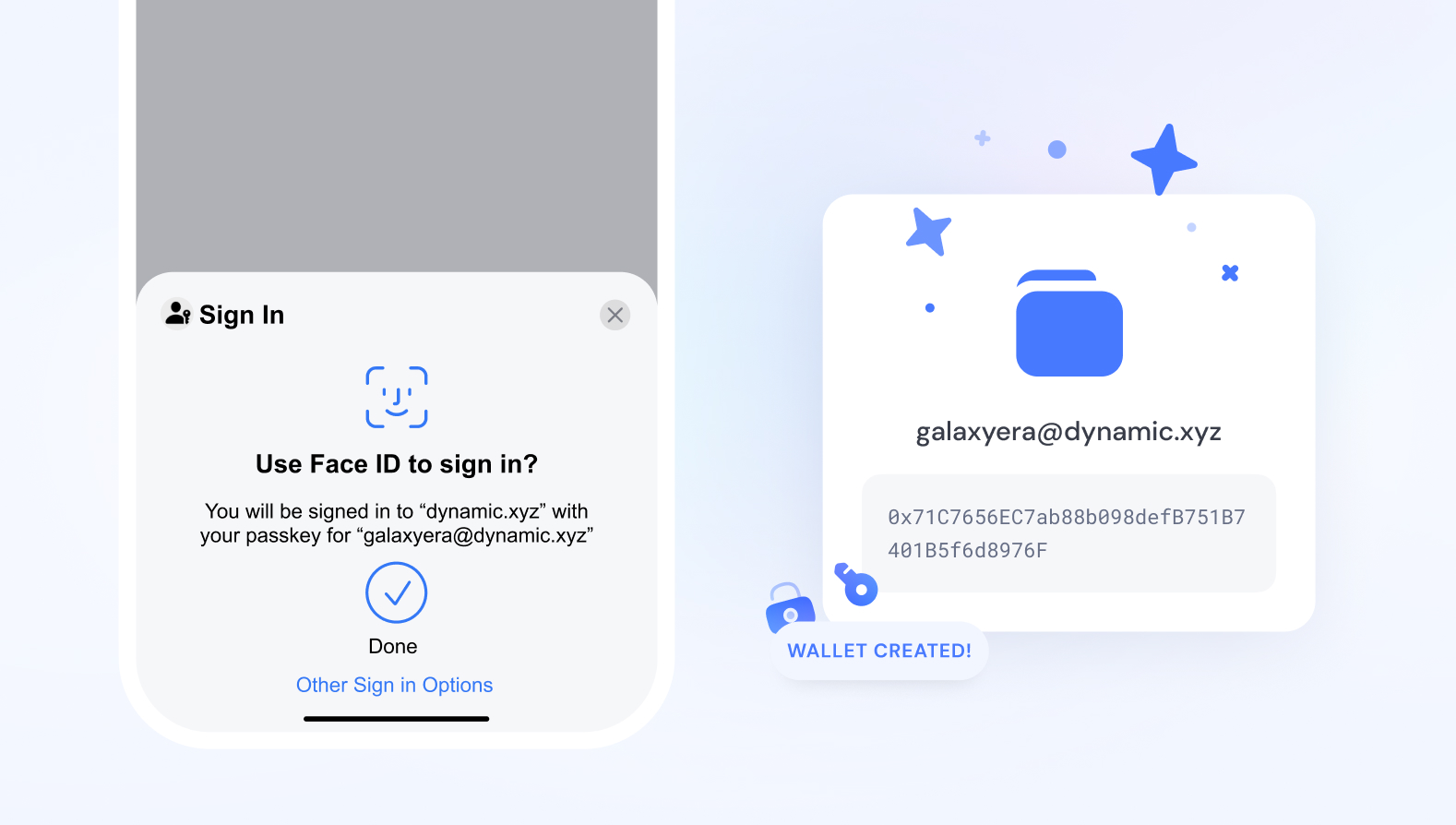
How passkey wallets replace seed phrases
A passkey wallet is a Web3 smart account that replaces traditional seed phrases with biometric authentication methods like FaceID or TouchID. By using WebAuthn and account abstraction, these wallets simplify onboarding and improve security (Chainlink, 2026). This shift moves the burden of secret management from the user to the device.
In a traditional model, you are responsible for a 12- or 24-word seed phrase. Lose it, and your assets are gone. Write it down, and you risk physical theft. A passkey wallet removes this single point of failure. The private key is generated and stored within a secure enclave on your device, such as Apple’s Secure Enclave or Android’s StrongBox. You never see the key, and you never back it up manually.
Authentication happens through your device’s biometric sensors or PIN. When you need to sign a transaction, the device verifies your identity locally and signs the hash without exposing the private key to the application. This architecture aligns with the Passkeys Foundation’s goal of replacing passwords with cryptographic keys that are easier to create and use (Passkeys Foundation). The result is a wallet that feels as simple as unlocking your phone, but provides enterprise-grade security for your digital assets.
To understand the market context of this adoption shift, we can look at the broader crypto market trends.
How biometric auth replaces seed phrases
Passkey wallets shift the burden of security from human memory to hardware. Instead of memorizing or writing down a twelve-word seed phrase, you use your device’s FaceID, TouchID, or PIN to unlock your wallet. This change relies on the WebAuthn standard, the same technology that lets you log into websites without passwords.
When you create a passkey wallet, the device generates a unique public-private key pair. The private key never leaves your phone or computer. It is stored in the Secure Enclave or Trusted Platform Module (TPM) of your device, a dedicated chip designed to resist extraction even if the device is compromised. You do not need to back up a string of words; the key is bound to the hardware you already own.
Authentication happens through a cryptographic handshake. When you try to sign a transaction, the wallet asks the operating system to verify your biometrics. If FaceID matches, the Secure Enclave signs the transaction locally and returns only the signature. The private key is never exposed to the app, the browser, or the internet. This process is defined by the FIDO2 standard, which ensures that the authentication is tied to the specific application origin.
This architecture removes the most common cause of crypto loss: seed phrase theft. You no longer risk losing your funds because you wrote your recovery phrase on a sticky note or stored it in an unsecured cloud drive. The key exists only where you authenticate, making the wallet as secure as the biometric scanner on your device.
Security Benefits for High-Stakes Users
High-stakes finance demands a margin of error that traditional seed phrases cannot reliably provide. Passkey wallets address this by anchoring asset access to hardware-backed biometrics, effectively removing the human element from the most vulnerable part of the chain. For users managing significant capital, this shift is not merely about convenience; it is a structural defense against the most common vectors of theft.
Eliminating Phishing Vectors
The primary failure point in Web3 security is the user interface. Attackers routinely create fraudulent interfaces that mimic legitimate wallets, tricking users into inputting their 12-word recovery phrases. Passkey wallets, built on the WebAuthn standard, bind the cryptographic key to a specific domain origin. If a user navigates to a spoofed site, the browser refuses to release the biometric signature because the domain does not match the registered origin. This technical constraint makes phishing attacks against passkey wallets largely ineffective, as the key cannot be exfiltrated even if the user is deceived.
Reducing Key Management Errors
Seed phrase management introduces a high risk of catastrophic human error. Users often write phrases down on insecure paper, store them in unencrypted digital files, or lose them entirely. Passkey wallets utilize the device’s Secure Enclave to manage the private key. The key never leaves the hardware, and backups are handled through the device’s native ecosystem (such as iCloud Keychain or Google Password Manager). This reduces the cognitive load on the user and eliminates the single point of failure associated with manual backup storage.
Institutional-Grade Authentication
For high-net-worth individuals and institutional players, the ability to enforce multi-factor authentication without compromising usability is critical. Passkey wallets support conditional UI and user verification requirements that align with enterprise security policies. This allows for the integration of corporate identity providers, ensuring that access to high-value assets requires both biometric confirmation and organizational approval.
The transition to biometric-based wallets represents a maturation of Web3 security. By leveraging existing hardware security modules, passkey wallets offer a level of protection that is both more robust and more user-friendly than the seed phrase model. This alignment of security and usability is essential for the next wave of institutional adoption.
Onboarding speed and daily use
Passkey wallets remove the friction of seed phrases by generating keys locally on the device and encrypting them with the user’s biometric or PIN. Creating a wallet takes one click, and the private keys never leave the device unprotected. This approach makes crypto access as simple as unlocking a phone, lowering the barrier for non-technical users who previously struggled with complex backup procedures.
Cross-device synchronization is handled through the underlying platform accounts, such as Apple ID or Google. When a user logs into a new device, their passkey credentials are verified via biometrics, allowing immediate access to their wallet without manual key transfers. This seamless experience ensures that losing a phone doesn’t mean losing access, provided the user has recovery options set up through their platform account.
The simplicity of this model is evident in the rapid adoption of passkey-based onboarding flows in major wallets. Users can create a wallet and begin transacting in seconds, a stark contrast to the minutes or hours required to securely generate and store traditional seed phrases. This shift from complex key management to intuitive biometric authentication is reshaping how everyday users interact with digital assets.
Standards and ecosystem compatibility
The shift from seed phrases to biometrics relies on two established standards: FIDO2 and WebAuthn. These protocols allow your device’s hardware to sign transactions without exposing private keys to the internet. By 2026, this infrastructure has moved from experimental to essential for consumer-grade crypto wallets.
Major platforms have integrated these standards to balance security with usability. Coinbase Wallet uses WebAuthn to secure login sessions and transaction approvals, reducing the friction of manual key management. Similarly, Trust Wallet SWIFT now supports passkeys for wallet recovery, offering a safer alternative to writing down twelve words on paper.
To understand the practical difference, compare the security and recovery models of traditional and modern wallets.
| Feature | Seed Phrase Wallet | Passkey Wallet |
|---|---|---|
| Authentication | Manual entry of 12-24 words | Biometric or device PIN |
| Recovery | Single paper backup; high risk of loss | Device-bound or cloud-synced key |
| Security Model | User manages private key storage | Hardware security key isolation |
| User Experience | High friction for new users | Instant login and signing |
No comments yet. Be the first to share your thoughts!