
What passkey wallets actually are
Passkey wallets are smart wallets built on FIDO2 and WebAuthn standards that store private keys directly in your device’s hardware. Instead of relying on a vulnerable password or a fragile seed phrase, these wallets use the same biometric authentication you already trust for logging into your phone or laptop. The private key never leaves the secure enclave, meaning it cannot be stolen through phishing or data breaches on remote servers.
This architecture fundamentally changes how you interact with blockchain assets. When you sign a transaction, the device uses the biometric check to authorize the cryptographic signature locally. The result is a user experience that feels as simple as unlocking an iPhone, but with the security of a hardware wallet. As the Passkeys Foundation notes, this is the technology driving the next generation of crypto wallets because it is both simple to deploy and superior in user experience.
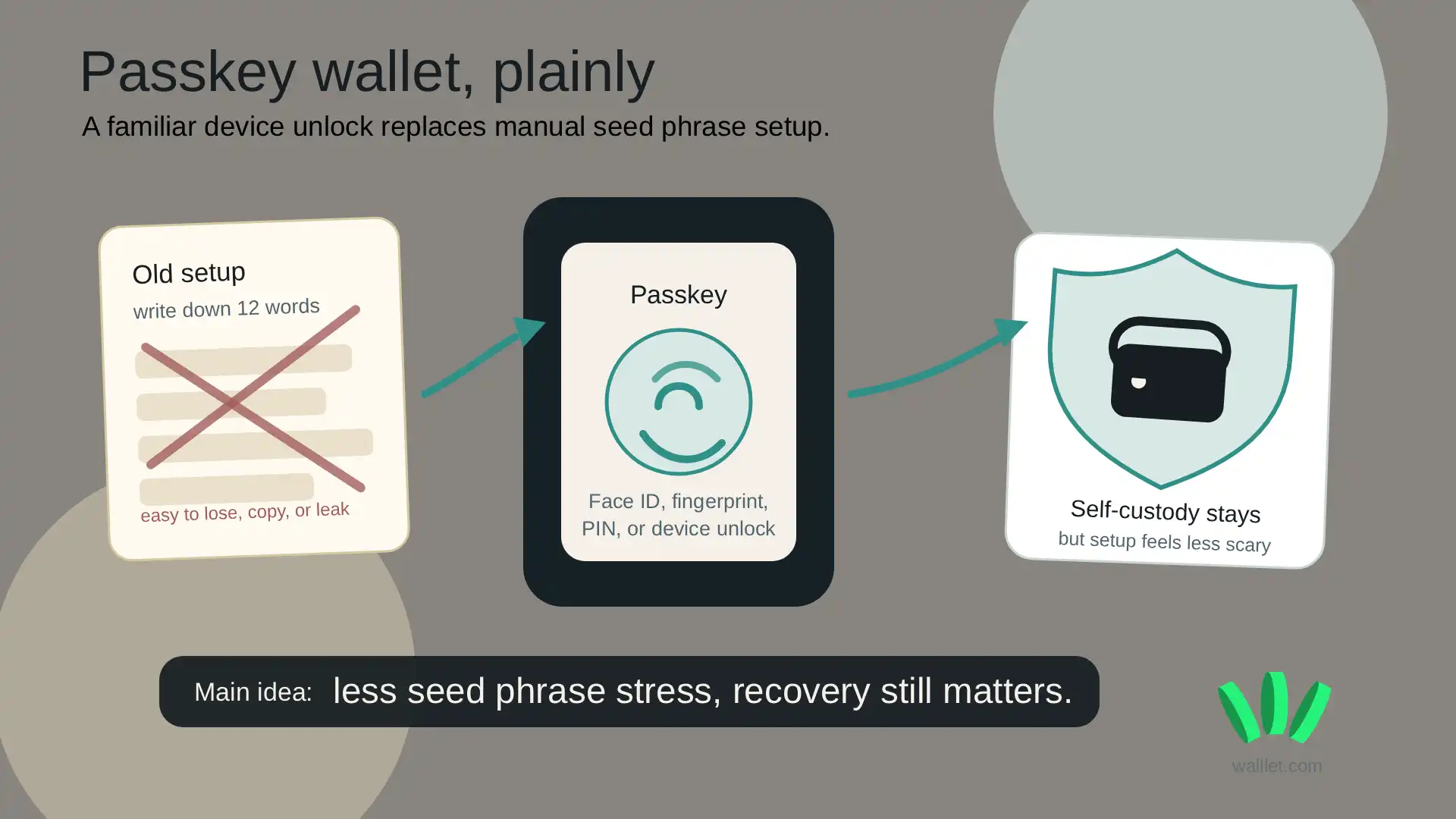
The elimination of seed phrases removes the single biggest point of failure in traditional crypto. You no longer need to memorize twelve words or worry about writing them down on paper that could be lost or stolen. If you lose your device, recovery is handled through your existing cloud backup or account recovery flows, just like any other modern app. This shift moves security from the user’s memory to the device’s hardware, significantly raising the bar for malicious actors.
By anchoring identity to the device itself, passkey wallets bridge the gap between convenience and institutional-grade security. They offer a polished onboarding process that sharpens a product’s UX while strengthening security. This approach allows users to engage with decentralized finance without the steep learning curve associated with traditional wallet management.
Biometric security beats seed phrases
The primary vulnerability of traditional cryptocurrency wallets lies in the seed phrase itself. A seed phrase is a list of random words that serves as the master key to your assets. If a user writes this down on paper, it can be stolen, lost, or destroyed by fire or water. If they store it digitally, it can be intercepted by malware. The security of the entire wallet rests on a single, fragile piece of information that humans are notoriously bad at protecting.
Passkey wallets remove this human error entirely. Instead of relying on a memorized or written list of words, these wallets use the device’s built-in biometric sensors—Face ID, Touch ID, or fingerprint scanners—to authorize transactions. The private keys are generated locally on the device and encrypted using the operating system’s secure enclave. This means the key never leaves the hardware, and it cannot be phished because there is no secret string to type into a fake website.
This shift from "something you know" (a password or phrase) to "something you are" (biometrics) fundamentally changes the attack surface. Phishing attacks, which currently account for the majority of crypto thefts, rely on tricking users into revealing their secrets. With passkeys, the authentication is tied to the specific domain and the physical device. A user cannot accidentally give away their passkey because it is not a string of characters; it is a cryptographic signature validated by the hardware itself.
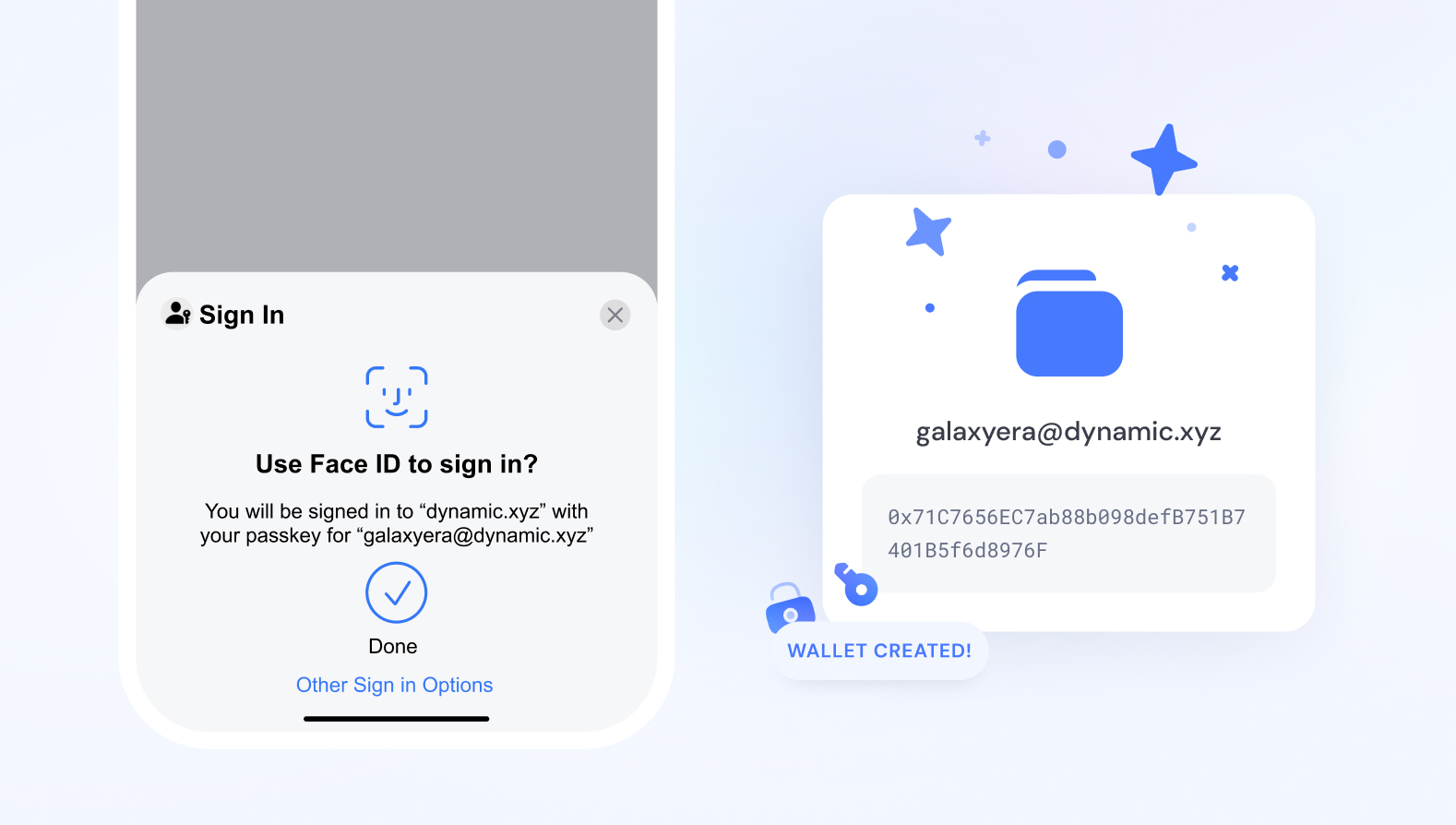
The result is a security model that is resistant to the most common social engineering tactics used today. While no system is immune to sophisticated physical attacks or compromised devices, passkeys eliminate the low-hanging fruit that most attackers target. By integrating authentication directly into the device’s hardware, passkey wallets offer a layer of protection that seed phrases simply cannot match.
Leading passkey wallet providers in 2026
The market for passkey wallets is fragmenting into distinct approaches, each targeting different user needs and developer ecosystems. As of 2026, three platforms stand out for their implementation of this technology: Coinbase, Exodus, and Helius. While they all replace seed phrases with device-bound authentication, their execution varies significantly in terms of multi-chain support, onboarding speed, and developer accessibility.
The following comparison highlights how these leaders handle the core mechanics of passkey integration.
| Provider | Multi-Chain | Onboarding | Developer API |
|---|---|---|---|
| Coinbase | Base (EVM) | Biometric (Face ID/Touch) | Smart Wallet SDK |
| Exodus | Multi-chain | Device Passkey | Embedded Wallet SDK |
| Helius | Solana | Hardware Module | Solana Passkey SDK |
Coinbase has integrated passkeys into its Base smart wallet, allowing users to sign transactions using biometrics stored on their device. This approach prioritizes simplicity for EVM users, though it currently limits multi-chain flexibility compared to broader wallets. Developers can integrate this via Coinbase’s Smart Wallet SDK, which handles the cryptographic signing behind the scenes.
Exodus offers a more generalized solution with its Passkeys Wallet, designed for self-custody across multiple blockchains. By embedding the wallet directly into dApps, Exodus enables Web2 businesses to onboard users without requiring them to manage private keys. This model is particularly effective for platforms seeking to reduce friction during user registration.
Helius focuses on the Solana ecosystem, leveraging hardware security modules to store cryptographic keys. Their approach emphasizes security for high-stakes transactions on Solana, providing developers with a specialized SDK to integrate passkey authentication into Solana-based applications.
The choice between these providers depends on your primary use case. If you are building on Solana, Helius provides the most robust infrastructure. For broader multi-chain exposure, Exodus offers greater flexibility. Coinbase remains the best option for users already embedded in the Base ecosystem who prioritize ease of use over cross-chain versatility.
Developer integration and dApp adoption
Developers are shifting from complex seed phrases to passkey wallets to lower the barrier for Web2 users. This integration allows dApps to offer familiar biometric logins, replacing the friction of generating and storing cryptographic backups. By embedding these wallets directly into the user interface, platforms can onboard millions of new users without forcing them to learn private key management.
The technical implementation relies on the WebAuthn standard, which handles the cryptographic signing of transactions on the device. This approach ensures that private keys never leave the user’s hardware, significantly reducing the risk of phishing and key theft. Projects like Dynamic and Exodus are providing SDKs that make this integration straightforward for existing Web2 infrastructure.
This shift creates a more secure environment for decentralized applications. Users benefit from passwordless authentication that is resistant to credential stuffing attacks, while developers gain access to a broader, less technically proficient audience. The result is a smoother entry point into Web3, where security and convenience no longer require trade-offs.
No comments yet. Be the first to share your thoughts!