
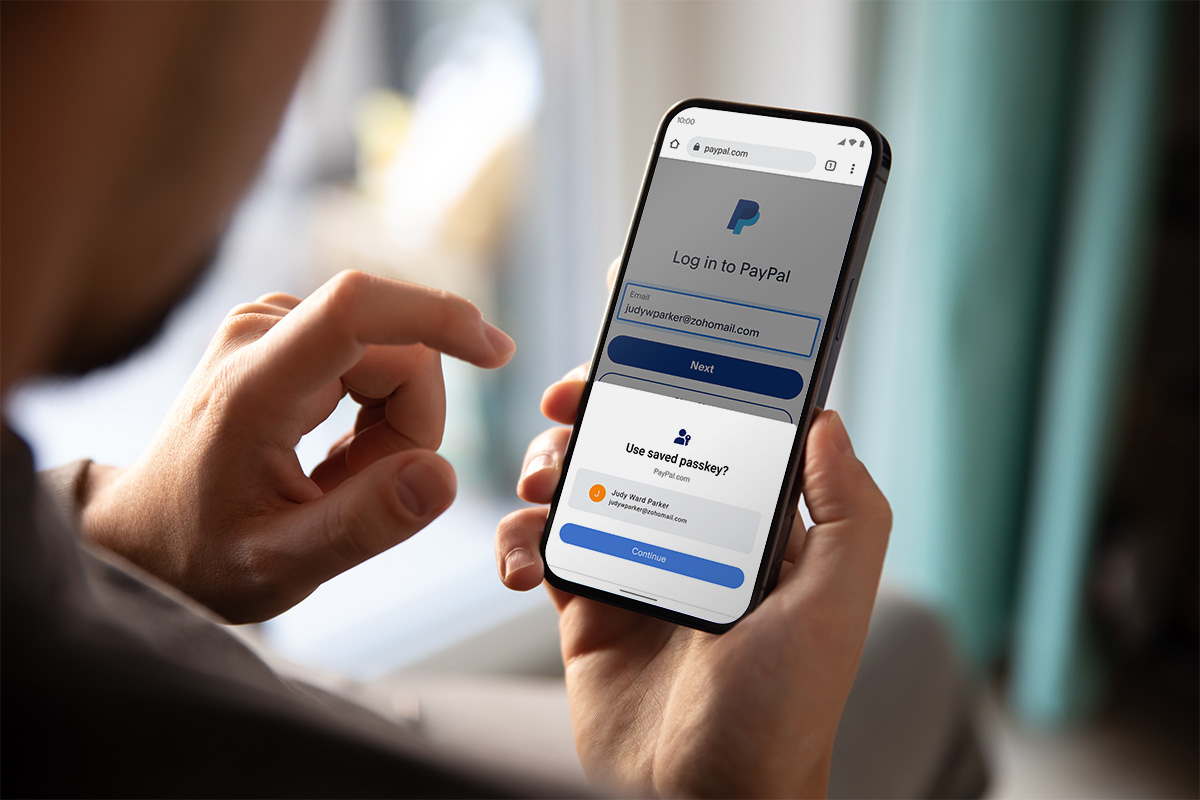
Why passkey wallets define 2026 security
The architecture of digital identity is undergoing a fundamental shift. We are moving away from the fragile, user-managed chaos of seed phrases toward a model where the device itself becomes the vault. This transition is not merely a UX improvement; it is a structural fix for the security vulnerabilities that have plagued the industry for a decade.
The scale of this adoption is already visible. According to FIDO Alliance CEO Andrew Shikiar, over 4 billion passkeys are now being used to secure sign-ins globally [1]. This metric signals that the market has moved past the experimental phase. The infrastructure is in place, and the reliance on traditional mnemonic backups is rapidly becoming a legacy risk.
Passkey wallets operationalize this by replacing traditional seed phrases with biometric authentication methods like FaceID or TouchID [2]. By anchoring cryptographic keys to the secure enclave of a user’s device, these wallets eliminate the single point of failure inherent in writing down 12 or 24 words. The security model shifts from "what you know" to "what you are," making phishing and social engineering significantly harder to execute.
This shift defines the security landscape of 2026. The passkey wallet is no longer a niche feature but the standard for high-stakes digital interaction. As adoption accelerates, the distinction between traditional crypto wallets and passkey-based smart accounts will blur, leaving behind the cumbersome and insecure methods of the past.
How WebAuthn and FIDO2 Enable Passwordless Access
The shift to passwordless crypto in 2026 is not a UX convenience; it is a security imperative. Legacy seed phrases and private key files are single points of failure. A stolen mnemonic phrase grants immediate, irreversible access to assets. WebAuthn and FIDO2 standards close this vulnerability by moving the private key out of the cloud and into a secure, hardware-backed enclave on the user’s device.
WebAuthn acts as the bridge between the browser and the device’s operating system. When a user interacts with a smart contract wallet, the authentication request is sent to the device’s secure element. Here, the FIDO2 protocol handles the cryptographic heavy lifting. The private key never leaves the device. Instead, the device uses the local biometric—Face ID, Touch ID, or a PIN—to authorize a signature. This signature is then passed back to the blockchain application.
This mechanism relies on the P-256 elliptic curve algorithm and EIP-7212, which allows smart contracts to recognize public keys generated by WebAuthn. The result is a seamless experience where biometrics replace the need to memorize or store complex strings. The security model shifts from "something you know" to "something you are" or "something you have," effectively neutralizing phishing and credential stuffing attacks that have plagued the industry for years.
The implications for the 2026 market are profound. By removing the friction of seed phrase management, WebAuthn enables mass adoption without compromising the self-custody ethos of blockchain. Users gain institutional-grade security with consumer-grade ease. The technology ensures that access to digital assets is as robust as the hardware in their pocket, making the passkey wallet the standard for secure digital ownership.
ERC-4337 and the smart contract advantage
The transition to passkey wallets in 2026 is not merely a UX upgrade; it is a structural shift enabled by Account Abstraction (ERC-4337). Traditional EOAs (Externally Owned Accounts) are rigid: if you lose your private key, your assets are gone forever. Passkey wallets, built on smart contract standards, replace seed phrases with biometric authentication, but their true power lies in the underlying contract logic.
ERC-4337 decouples transaction execution from account ownership. This separation allows for recovery mechanisms that legacy wallets cannot support. If a user loses access to their device, a trusted social group or time-delayed recovery process can restore access to the smart contract. This solves the "lost key" problem that has plagued crypto adoption for over a decade, turning a fatal error into a manageable administrative task.
Smart contract wallets also enable gas sponsorship and paymasters. Users can pay transaction fees in stablecoins or have dApps cover costs entirely. This removes the friction of holding native tokens for gas, a significant barrier for mainstream onboarding. The combination of biometric security and contract-level flexibility makes ERC-4337 the backbone of the next generation of digital identity.
Early Passkey Wallet Failure Modes
The promise of passwordless security often collapses under the weight of implementation flaws. Early passkey wallets, relying exclusively on FIDO2 and WebAuthn standards, introduced critical vulnerabilities that legacy systems did not possess. These failures are not merely bugs; they are structural risks inherent to platform-locked cryptographic models.
Platform Lock-In and Data Sovereignty
The most immediate failure mode is vendor lock-in. When a passkey is bound to a specific operating system—such as Apple’s Secure Enclave or Google’s Titan M—users lose direct control over their private keys. If a platform updates its security protocols, deprecates an API, or shuts down a service, the user’s assets can become inaccessible. This centralization contradicts the decentralized ethos of blockchain technology, creating a single point of failure that no longer resides in a seed phrase but in a corporate server.
Cryptographic Mismatches and Curve Limitations
Technical incompatibilities further destabilize early implementations. Most consumer passkeys rely on the P-256 elliptic curve, a standard optimized for general authentication rather than blockchain security. As noted in WebAuthn specifications and EIP-7212 discussions, this mismatch can prevent seamless integration with smart contract wallets that require specific curve support for gasless transactions or agent signing. The result is a fragmented user experience where security features break when moving between different blockchain environments or dApps.
The 2026 Hybrid Solution
To mitigate these risks, the 2026 market is shifting toward hybrid Multi-Party Computation (MPC) architectures. These solutions distribute key shares across multiple devices or servers, ensuring that no single platform holds the complete private key. This approach preserves the user-friendly biometric authentication of passkeys while restoring data sovereignty and cross-platform compatibility. By decoupling authentication from key custody, hybrid wallets eliminate the failure modes that plagued earlier iterations.
The transition from passkey-only to hybrid models represents a necessary evolution in wallet security. As the industry matures, the focus is shifting from simple biometric convenience to robust, interoperable key management that can withstand both technical and corporate failures.
Passkey Wallets vs. Seed Phrases
The shift from legacy seed phrases to passkey wallets marks a structural change in how assets are secured. While seed phrases rely on human memory to store cryptographic keys, passkey wallets utilize device-bound biometrics via FIDO2 and WebAuthn standards. This transition addresses the critical vulnerability of user error that has plagued the industry for years.
Seed phrases are essentially static strings of text. If a user writes them down on paper, they risk physical theft or loss. If they store them digitally, they risk malware interception. There is no inherent mechanism to detect unauthorized access attempts. In contrast, passkey wallets use public-key cryptography anchored to the device's Secure Enclave. Access requires biometric verification, making remote phishing attacks significantly harder to execute.
Recovery represents the most divergent aspect of these systems. Losing a seed phrase typically means permanent loss of funds, as there is no central authority to reset credentials. Passkey wallets offer structured recovery options, such as cloud backups or social recovery mechanisms, managed through the underlying smart account infrastructure. This reduces the "single point of failure" risk inherent in legacy cold storage methods.
| Feature | Seed Phrase Wallet | Passkey Wallet |
|---|---|---|
| Authentication | Manual text entry | Biometric device lock |
| Recovery | Irreversible if lost | Cloud or social backup |
| Phishing Risk | High (manual copy/paste) | Low (origin-bound) |
| Key Management | User-held static string | Device-bound dynamic key |
How passkey wallets address 2026 security risks
Can I recover my assets if I lose my device?
Yes, but only if the wallet supports account abstraction. Unlike seed phrases, which offer no recovery if lost, passkey wallets built on ERC-4337 allow for social recovery or time-delayed access restoration. This prevents permanent asset loss, a common failure mode in legacy self-custody.
Are passkeys immune to phishing attacks?
Passkeys are significantly more resistant to phishing than passwords or seed phrases because they are origin-bound. A passkey generated for app.crypto.com will not authenticate on fake-app.crypto.com. This cryptographic binding neutralizes credential stuffing and phishing attempts that target traditional login methods.
What happens if the operating system vendor shuts down?
This is the primary risk of pure passkey wallets: vendor lock-in. If Apple or Google deprecates the secure enclave API, access may be lost. The 2026 standard mitigates this by adopting hybrid MPC models, which distribute key shares across multiple devices, ensuring no single platform controls the entire private key.
No comments yet. Be the first to share your thoughts!