
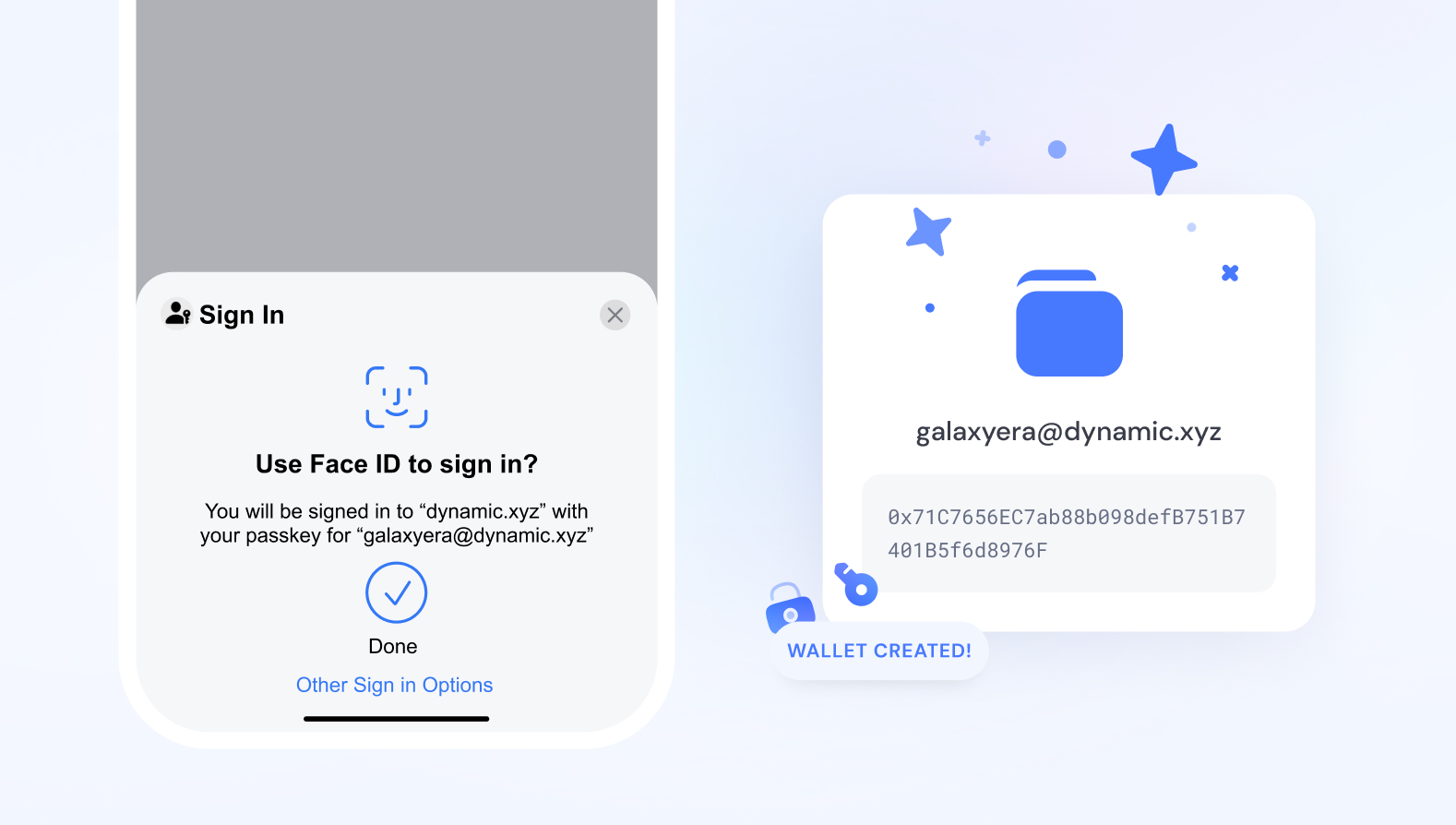
Defining the passkey wallet standard
A passkey wallet replaces the fragile seed phrase with public-key cryptography anchored to your device. Instead of writing down twelve words that can be lost, stolen, or intercepted, you use biometrics or a PIN to unlock a private key that never leaves your hardware. This shift moves authentication from something you know or have to something you are.
Traditional seed-phrase wallets rely on human memory and physical security for the recovery phrase. One typo during backup, one photo taken in public, or one phishing site can drain an account permanently. Passkey wallets eliminate this attack surface by generating keys locally on the device’s secure enclave. The private key is cryptographically bound to the device and cannot be exported, making remote theft impossible.
This architecture is built on the FIDO2 and WebAuthn standards, which have been industry benchmarks for secure login for years. By applying these protocols to cryptocurrency wallets, developers create a system where signing a transaction requires physical presence and user consent. The result is a wallet that is as secure as your phone’s lock screen, removing the single point of failure that has plagued crypto adoption for a decade.
Security mechanics and phishing resistance
Passkey wallets offer a practical advantage over seed phrases by removing the cognitive load of key management. The decision to adopt passkeys is driven by the need to survive normal use, maintenance, and budget constraints without relying on ideal security hygiene.
The core benefit is the elimination of human error. Traditional wallets require users to manually record and store recovery phrases, a process prone to mistakes that lead to permanent asset loss. Passkey wallets automate this by generating keys locally and binding them to the device’s hardware security module. This ensures that the private key remains isolated from the operating system and network, preventing remote extraction.
The Shift From Seed Phrases to Passkeys
The crypto industry is undergoing a structural shift away from seed phrases toward passkey-based wallets. This transition addresses the critical security failure of traditional self-custody: the user's inability to safely manage cryptographic secrets. Seed phrases are single points of failure; losing them means losing funds permanently, while writing them down exposes them to physical theft and digital scraping. Passkey wallets replace this fragile manual process with public-key cryptography anchored in device hardware, eliminating the human error that causes most losses.
Major providers are now embedding this technology to reduce friction without sacrificing self-custody principles. Coinbase’s Base network has integrated passkeys into its smart wallet infrastructure, allowing users to sign transactions using biometric verification instead of managing a 12-word recovery string. Similarly, Exodus has launched a dedicated Passkeys Wallet that generates private keys locally on the device, encrypting them with the device’s secure enclave. This approach allows developers to embed wallets into dApps, creating a seamless onboarding experience that feels like a standard web login but retains full ownership of assets.
The following comparison highlights the operational differences between traditional seed phrase wallets and emerging passkey solutions. The data illustrates how passkeys mitigate the specific risks associated with key management while improving the user experience for everyday transactions.
| Feature | Seed Phrase Wallet | Passkey Wallet |
|---|---|---|
| Key Generation | User creates and stores 12-24 words | Device generates key locally |
| Authentication | Manual entry of recovery phrase | Biometric or device PIN |
| Recovery Process | High risk of loss or theft | Hardware-backed secure enclave |
| User Experience | High friction, steep learning curve | Instant, password-less login |
| Security Model | Dependent on user vigilance | Cryptographic hardware isolation |
As adoption accelerates, the technical differentiation becomes clear. Passkey wallets do not rely on third-party custodians to hold keys; they leverage the same cryptographic standards used in banking and government IDs. This alignment with existing security infrastructure suggests that passkeys will become the default standard for self-custody, moving the industry away from the high-stakes gamble of seed phrase management.
The End of Seed Phrase Anxiety
The single greatest barrier to mass adoption in cryptocurrency has never been the technology itself; it is the cognitive load placed on the user. Traditional non-custodial wallets force individuals to become their own banks, a role for which most are entirely unprepared. The standard recovery method—a 12 or 24-word seed phrase—is a fragile link in the security chain. Human memory is imperfect, and paper is vulnerable to fire, flood, and theft. When a user loses this phrase, their assets are gone forever. This high-stakes environment creates a barrier to entry that keeps the majority of the population on the sidelines.
Passkey wallets dismantle this friction by replacing human memory with device-level cryptography. Instead of memorizing random words, users authenticate with Face ID, Touch ID, or a PIN already embedded in their smartphone or laptop. This shift transforms the wallet from a complex financial instrument into a familiar, intuitive tool. The security model leverages the same public-key cryptography standards used by governments and banks, ensuring that private keys never leave the device’s secure enclave. This approach eliminates the risk of phishing, as the cryptographic signature is bound to the specific domain, making credential theft virtually impossible.
The speed of this onboarding process is a decisive market differentiator. Creating a passkey wallet takes seconds, not minutes, and requires no technical expertise. This seamless experience allows developers to focus on building core product features rather than educating users on security hygiene. As the industry moves toward mainstream utility, the ability to onboard users with the same ease as logging into a social media app will determine which platforms succeed. The market is clearly shifting toward solutions that prioritize user experience without compromising the decentralized security model that defines crypto.
Passkey Wallet FAQs
The shift from seed phrases to biometrics isn't just a convenience upgrade; it's a fundamental restructuring of how you secure your assets. Here are the answers to the most critical questions about passkey wallets.
No comments yet. Be the first to share your thoughts!