

Passkeys Replacing MPC TEE Wallets: Seedless WebAuthn Smart Wallets for Web3 Recovery

In the high-stakes arena of Web3, where a single vulnerability can wipe out fortunes, passkeys crypto wallets are quietly staging a revolution. Forget the clunky seed phrases and the fragile trust in MPC or TEE enclaves; WebAuthn-native smart wallets deliver seedless bliss with phishing-resistant armor. As projects like Para and Web3Auth pioneer this shift, passkeys aren’t just an upgrade, they’re the strategic pivot that MPC and TEE wallets can’t match in speed, simplicity, or native recovery.

Traditional wallets chained users to mnemonic phrases, a relic prone to phishing, loss, or theft. MPC wallets splinter keys across parties for distributed security, while TEEs lean on hardware like Intel SGX for isolated computation. Both sound robust on paper, but reality bites: MPC demands constant network coordination, inflating latency during volatile trades, and TEEs expose users to supply-chain risks in those vaunted chips. I’ve traded derivatives long enough to know that friction kills edges; these setups introduce too much.
Why Passkeys Eclipse MPC and TEE as TEE Wallet Alternatives
Passkeys, rooted in the FIDO2 and WebAuthn standards, generate asymmetric key pairs bound to your device. The private key never leaves its secure enclave, unlocked via biometrics or PIN, no passwords needed. This isn’t hype; Solana’s passkey push via Helius proves it scales for real-time UX, sidestepping MPC’s multi-round handshakes. In passkeys vs MPC wallets, passkeys win on latency alone, authenticating in milliseconds versus MPC’s seconds-long sharding.
TEE wallets falter further under scrutiny. Those trusted execution environments promise isolation, but side-channel attacks and firmware flaws have plagued them, from Spectre to recent enclave breaches. Passkeys sidestep this by leveraging platform authenticators like Apple’s Secure Enclave or Android’s StrongBox, audited at OS level. No exotic hardware dependency means broader adoption, especially for mobile-first Web3 users tired of browser extensions.
Passkeys vs MPC TEE: Key Trade-offs
-
Phishing Resistance: Passkeys excel with WebAuthn origin-bound keys, inherently phishing-proof. MPC TEE wallets rely on secure shard distribution and enclaves.
-
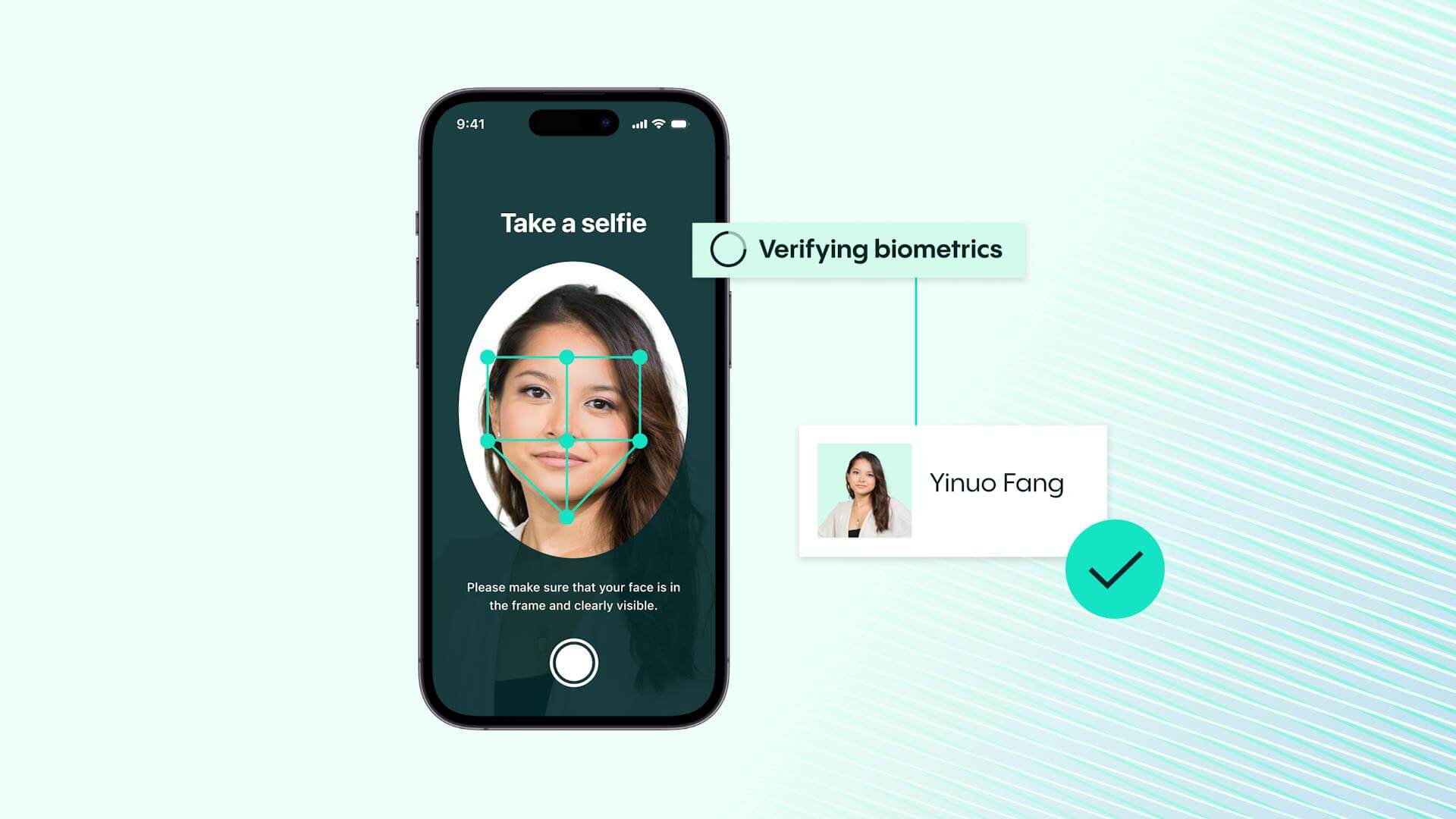
Authentication Speed: Passkeys enable near-instant biometrics like Face ID or Touch ID. MPC TEE adds latency from multi-party coordination.
-
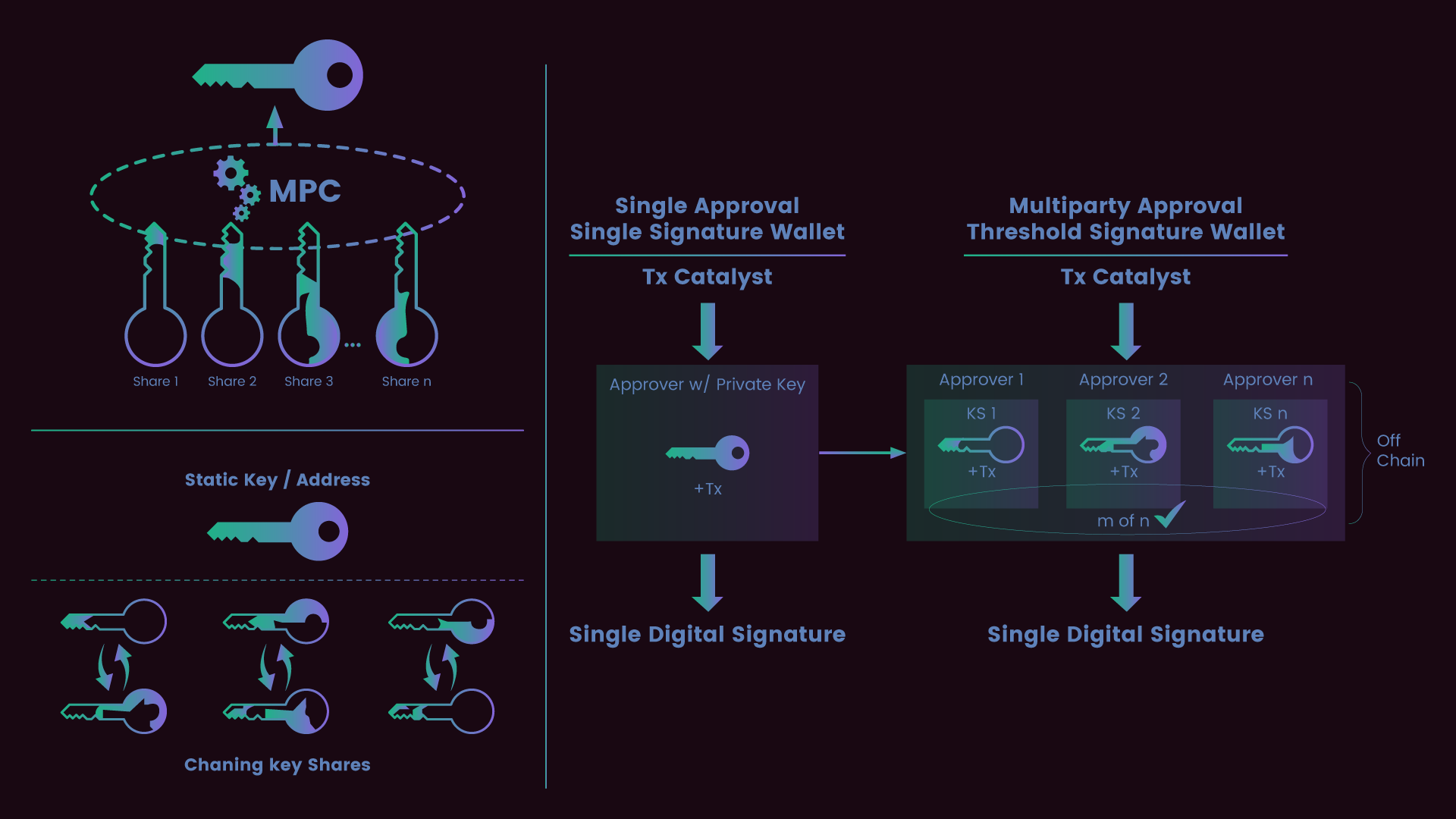
Recovery Options: Passkeys face device-bound limits and sync challenges. MPC TEE offers robust sharded key recovery across parties.
-
Curve Compatibility: Passkeys use P-256, needing adapters for secp256k1 chains. MPC TEE natively supports blockchain curves like Ed25519.
-

Hardware Dependency: Passkeys bind to user devices/YubiKeys. MPC TEE leverages Intel SGX-like enclaves for flexible, isolated execution.
-
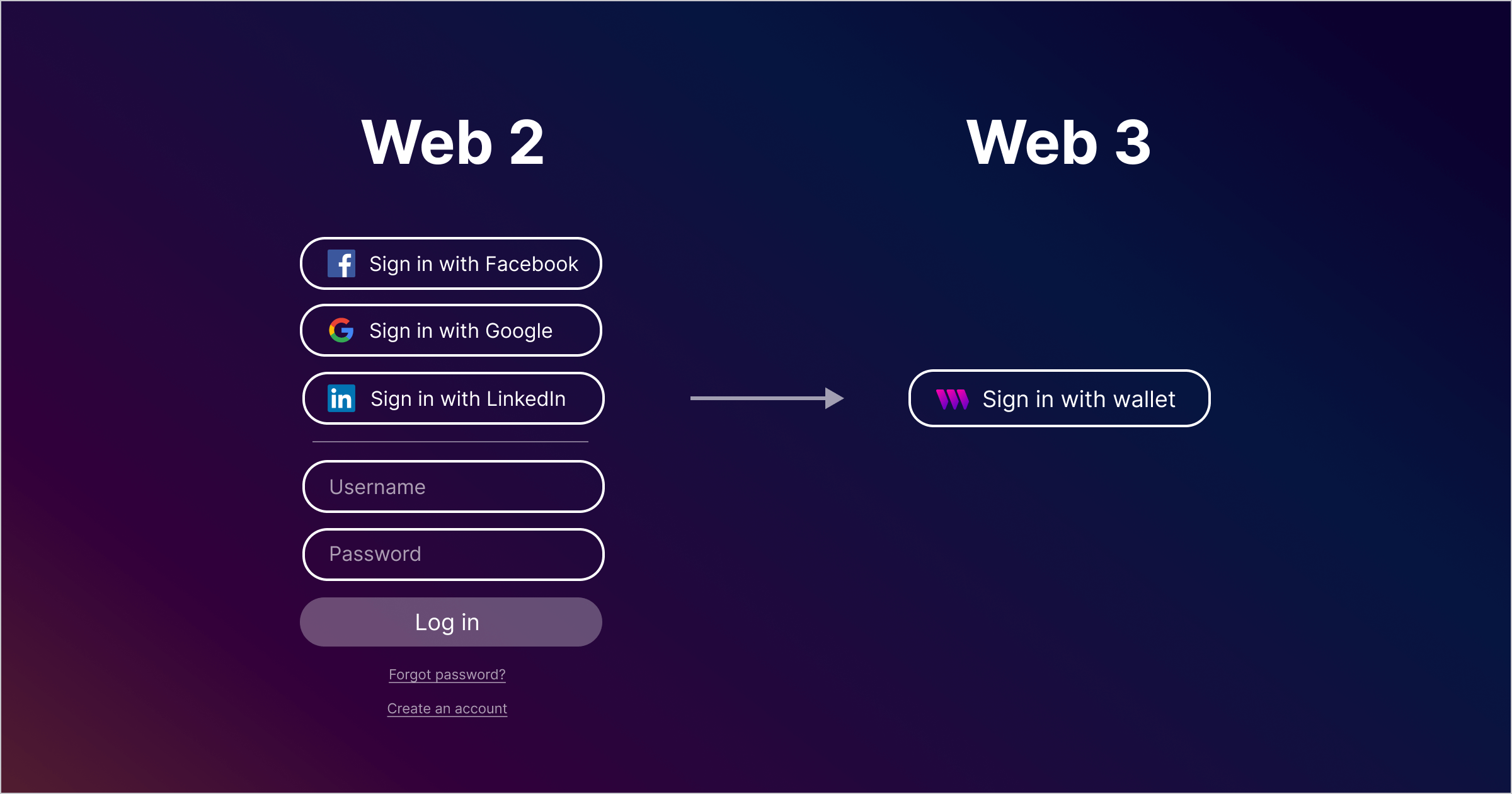
User Onboarding: Passkeys provide seedless access via Web3Auth or Para on Solana. MPC TEE suits enterprise but adds complexity.
WebAuthn Smart Wallets: Forging Phishing-Resistant Wallets for Web3
WebAuthn turns browsers into battle-hardened vaults. When you register a passkey, the relying party gets a public key; your device holds the private counterpart, attested cryptographically. Signing transactions? Biometric nudge, and it’s done, resistant to man-in-the-middle scams that plague seed-based or even MPC flows. Gate. com nails it: this maze of AA, MPC, and passkeys finds its optimal path in WebAuthn for daily crypto key management.
Curve mismatches? Early hurdles, sure, with passkeys on P-256 clashing against Ed25519 for Solana or secp256k1 for Ethereum. But ERC-4337 and account abstraction bridge this, letting smart accounts wrap passkey sigs into chain-native formats. Stackup’s Ethereum guide shows developers deploying this seamlessly, no seedless compromises.
Hybrids amplify the edge. Para’s Solana play uses passkeys for session auth, unlocking MPC-managed Ed25519 signers without extensions. Web3Auth aggregates OAuth for non-custodial infra, blending familiarity with seedless power. It’s strategic: passkeys gatekeep, MPC signs, recovery flows via guardians or shards. No more “not your keys, not your crypto” paranoia when biometrics hold the fort.
Seedless Cryptocurrency Wallets and Web3 Passkey Recovery Revolution
Bhagya Rana’s Medium deep-dive lists passkeys among top seedless models, outshining social recovery’s trust issues or pure smart accounts’ gas bloat. Recovery here means device sync across ecosystem, like iCloud Keychain or Google Password Manager, with fallback guardians. Lose your phone? Authenticate on the new one, shards reconstruct via trusted contacts, all decentralized.
MPC TEE Wallets vs. Seedless WebAuthn Passkey Smart Wallets
| Aspect | MPC TEE Wallets | Seedless WebAuthn Passkey Smart Wallets |
|---|---|---|
| Seed Requirement | Often sharded seeds or key shares | None ✅ (fully seedless) |
| Authentication | Multi-party computation or TEE hardware approval | Biometrics (Face ID, Touch ID), PIN, or hardware keys (YubiKey) |
| Security Model | Relies on trusted parties/hardware; vulnerable to collusion or TEE exploits | Device-bound private keys; phishing-resistant; FIDO/WebAuthn standards |
| Recovery | Guardian networks or shard reconstruction; potential single points of failure | Cross-device sync (encrypted) or social recovery; hybrid MPC options available |
| Decentralization | Provider-dependent; centralized TEE/MPC services | User-controlled; standards-based, no intermediaries needed |
| User Experience | Complex setup and multi-step approvals | Seamless, passwordless onboarding ✅ |
| Cross-Platform | Limited by providers | Challenges exist but improving with hybrids (e.g., Para, Circle) |
This isn’t theoretical. Circle’s passkey integration powers smart contracts securely, while Stellar experiments with Soroban for WebAuthn wallets. Challenges persist, cross-platform sync lags behind passwords, but 2026’s updated context spotlights maturing hybrids balancing UX with robustness. Developers, take note: embedding passkeys now positions you ahead of the MPC-TEE exodus.
Strategic minds in Web3 recognize that true innovation lies in recovery resilience, where seedless cryptocurrency wallets shine brightest. Passkeys enable effortless device-to-device sync, leveraging cloud-backed authenticators without exposing keys. Imagine trading a volatile altcoin surge: MPC’s shard reconstruction could lag amid network congestion, but passkeys authorize instantly on your replacement device, guardians approving the handoff. This Web3 passkey recovery model minimizes downtime, preserving your edge in fast markets.
Hybrids: The Tactical Blend Outpacing Pure MPC TEE Wallets
While purists debate passkeys alone, hybrids dominate the battlefield. Para’s Solana implementation gates MPC signers with passkey auth, delivering Ed25519 signatures sans extensions. Web3Auth’s MPC-web fuses OAuth logins with non-custodial keys, aggregating providers for seamless onboarding. Gate. com unravels this: WebAuthn for auth, MPC for sharding, AA for flexibility. In passkeys vs MPC wallets, the combo crushes TEE alternatives by dodging hardware monopolies and attestation headaches.
Consider the math. MPC thresholds (t-of-n) demand quorum, risking liveness failures if nodes drop. Passkeys, device-synced, hit 99% uptime via platform ecosystems. TEEs? Vulnerable to firmware updates gone awry. Hybrids mitigate: passkey unlocks MPC shards, guardians hold recovery shards. Bhagya Rana spotlights this in her seedless models breakdown, positioning passkeys as the lightweight champion over MPC’s heft.
Pros and Cons of Passkeys, MPC, TEE, and Hybrid Wallets for Web3 Recovery and Security
| Technology | Pros | Cons |
|---|---|---|
| Passkeys | • Passwordless, seedless onboarding ✅ • Biometric/hardware auth (Face ID, Touch ID, YubiKey) 🔒 • Phishing-resistant • Seamless, fast UX |
• Device-bound (recovery challenges if device lost) • Cross-platform compatibility issues • Curve mismatches (e.g., ES256 vs blockchain ECDSA) |
| MPC Wallets | • Distributed key generation (no single failure point) • Shard-based recovery • Non-custodial infrastructure • High security for signing |
• Computational latency • Implementation complexity • Relies on MPC provider protocols |
| TEE Wallets | • Secure hardware isolation • Fast crypto operations • Device-bound private keys |
• Side-channel attack risks • Hardware supply chain vulnerabilities • Limited hardware availability |
| Hybrid (Passkeys + MPC/TEE) | • Easy passkey auth + robust MPC/TEE signing 🔐 • Seedless UX with reliable recovery • Balances usability and security |
• Integration complexity • Potential sync/recovery limitations |
Account abstraction supercharges this. ERC-4337 smart accounts proxy passkey sigs to chain-native curves, Ethereum devs wielding Stackup’s toolkit for frictionless deploys. Solana’s Helius pushes passkey UX natively, Stellar’s Soroban experiments with WebAuthn contracts. James Bachini demos it: Soroban smart wallets via passkeys, no seeds, pure velocity.
Challenges demand nuance. Cross-platform sync stumbles on Android-iOS silos, curve adaptations add dev overhead. Yet 2026’s landscape evolves: updated integrations pair passkeys with homomorphic encryption for blinded recoveries, as Jose Aguinaga dissects in his Web3 Galaxy Brain talk. Phishing resistance? Unmatched; public key registration thwarts credential stuffing, a staple in seed scams.
Phishing-Resistant Wallets: Passkeys as the New Web3 Standard
For everyday traders, this means wallets that scale with lifestyle. No more scribbled seeds or MPC apps pinging servers mid-rally. Phishing resistant wallets via WebAuthn mean biometric gates on every tx, origin-bound to boot. Web3Auth’s QR unlocks exemplify: scan, auth, sign. Circle’s passkey smart contracts extend this to DeFi, yield farming without key sweat.
Developers, structure your stack like a high-reward options play: defined risk via passkey bounds, asymmetric upside in UX adoption. Embed WebAuthn now, layer MPC for enterprise, AA for chains. Passkeys aren’t replacing MPC overnight; they’re the catalyst accelerating seedless adoption, rendering TEEs obsolete relics.
Forward thinkers eye mass onboarding. FIDO’s decentralized login ethos, pondered in LinkedIn threads, aligns perfectly with Web3’s ethos. No central honeypot, just attested keys proliferating across billions of devices. As MPC networks strain under scale and TEEs face regulatory chip scrutiny, WebAuthn smart wallets emerge as the efficient arbitrage: superior security at lower friction.
Trade smart, not hard: pivot to passkeys. The MPC-TEE era fostered paranoia; passkeys instill confidence. With hybrids maturing and standards converging, seedless Web3 beckons, wallets recovering as intuitively as unlocking your phone. Your assets deserve this upgrade, positioning you for the next bull cycle unencumbered.