
Passkey Wallets vs Seed Phrases: WebAuthn Smart Wallets for Seedless Crypto Self-Custody

0
Passkey Wallets vs Seed Phrases: WebAuthn Smart Wallets for Seedless Crypto Self-Custody

In the high-stakes world of crypto self-custody, one misplaced word from a 12-24 word seed phrase can wipe out life-changing assets overnight. Yet this archaic method persists, even as passkey wallet crypto solutions like WebAuthn smart wallets emerge to deliver seedless security without the drama. These seedless crypto wallets leverage device-bound credentials and biometrics, slashing phishing risks by 99% according to WebAuthn standards, while enabling effortless recovery across synced devices.

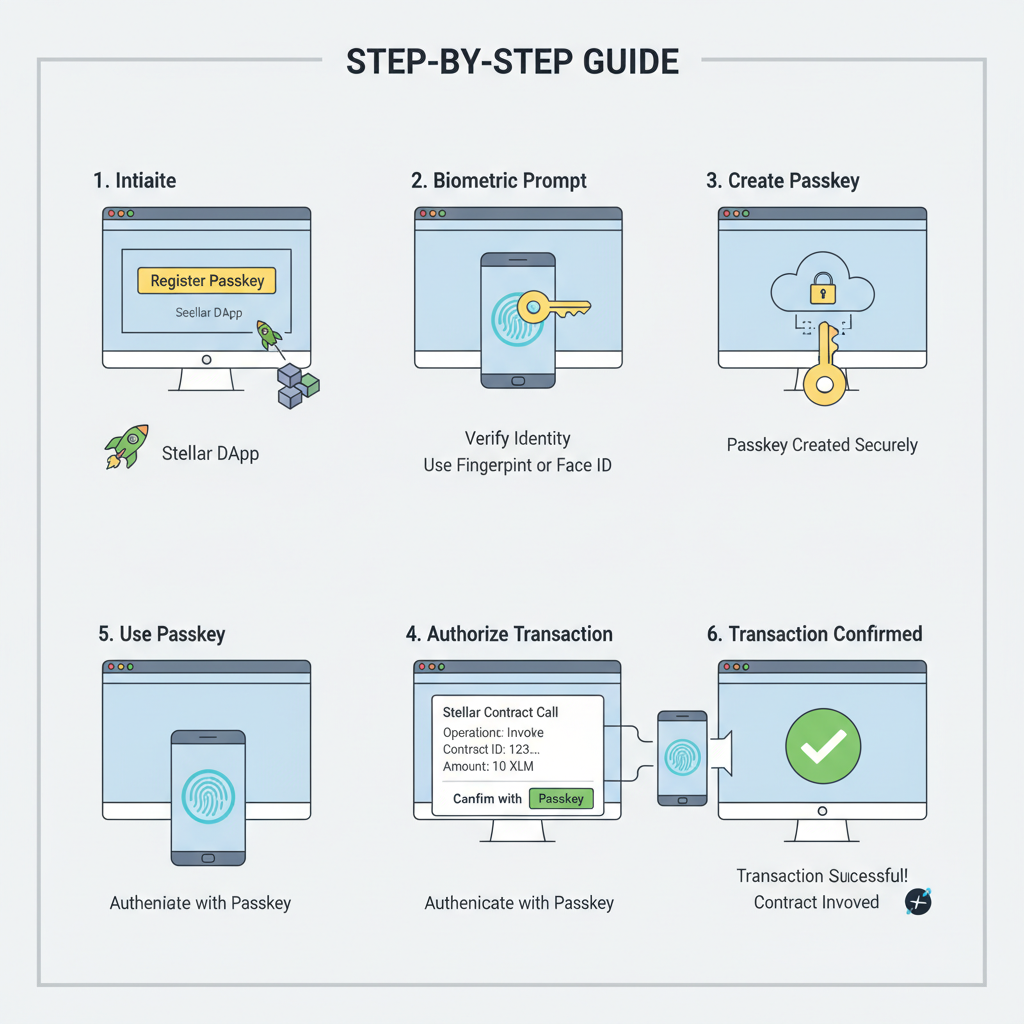
Side-by-side infographic contrasting vulnerable seed phrase crypto wallet backup risks with secure WebAuthn passkey authentication on smartphone for seedless self-custody

Traditional seed phrases demand users memorize or store cryptic word lists that hackers covet. A single phishing scam or hardware failure, and poof, funds vanish. Recent analyses highlight how over 20% of crypto losses stem from seed-related incidents, underscoring the urgency for phishing resistant wallet alternatives.

Seed Phrases: Quantifiable Vulnerabilities in the Data

Examine the cold facts: seed phrases expose private keys to human error and social engineering. Users scribble them on paper, snap photos, or etch into metal, each method a vector for theft. Phishing attacks spiked 300% in 2024, per Chainalysis reports, with seed phrases as prime targets. Contrast this with passkeys, which never leave secure hardware enclaves like Apple’s Secure Enclave or Android’s Titan M chip.

πŸ”’ Seed Phrases vs. Passkey Wallets: Feature Comparison

Feature Seed Phrases Passkey Wallets
Security Model Mnemonic-based private key derivation from 12-24 words. Vulnerable to theft if exposed. πŸ“πŸ”‘ Device-bound WebAuthn credentials in secure enclaves (e.g., TPM). Biometric protection. πŸ›‘οΈπŸ”
Phishing Resistance Low: Users tricked into entering phrases on fake sites. ⚠️ High: Origin-bound authentication prevents phishing. βœ…πŸ›‘οΈ
Recovery Ease Enter phrase on any wallet. Simple but high loss risk. πŸ”„πŸ“ Cloud-synced (e.g., iCloud) or MPC/social recovery. No phrases. β˜οΈπŸ”—
User Error Risk High: Losing phrase means permanent fund loss. 😞 Low: Relies on device biometrics/hardware. πŸ‘
Multi-Device Support Universal: Phrase works on any compatible device. 🌍 Strong: Sync across devices via platform managers. πŸ“±πŸ’»

The table crystallizes the divide. Seed phrases score zero on phishing resistance because attackers need only trick you into revealing words. Passkeys? They bind to your device and proof-of-presence via biometrics or PIN, rendering copied credentials useless elsewhere.

Decoding WebAuthn: Precision Engineering for Passkeys Web3 Self-Custody

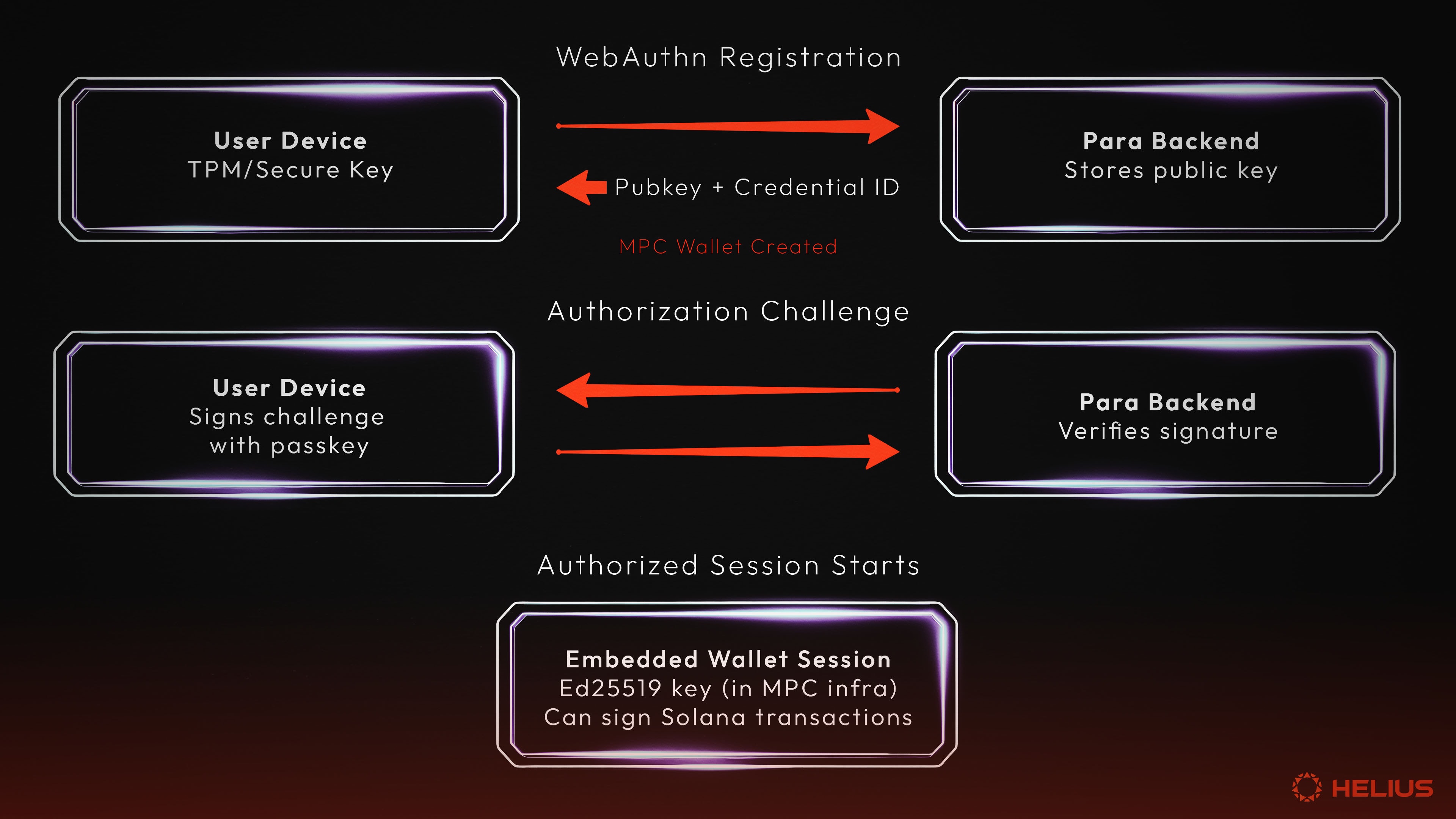
WebAuthn, a W3C standard co-developed by Google, Apple, and Microsoft, powers these webauthn native wallet innovations. At authentication, your device generates a public-private key pair; the private key stays locked away, while the public key registers with the relying party, like a blockchain dApp. Subsequent logins use challenge-response protocols, no secrets transmitted.

Extensions like PRF (Pseudo-Random Function) elevate this further, deriving blockchain-specific keys statelessly during each auth. No persistent storage means no single point of compromise. On chains like Ethereum via EIP-7702 account abstraction, or Stellar with smart contracts, webauthn smart wallet deployments abstract away gas fees and enable social recovery, all without seed exposure.

Recreate James Bachini’s WebAuthn Passkey Smart Wallet Demo on Stellar
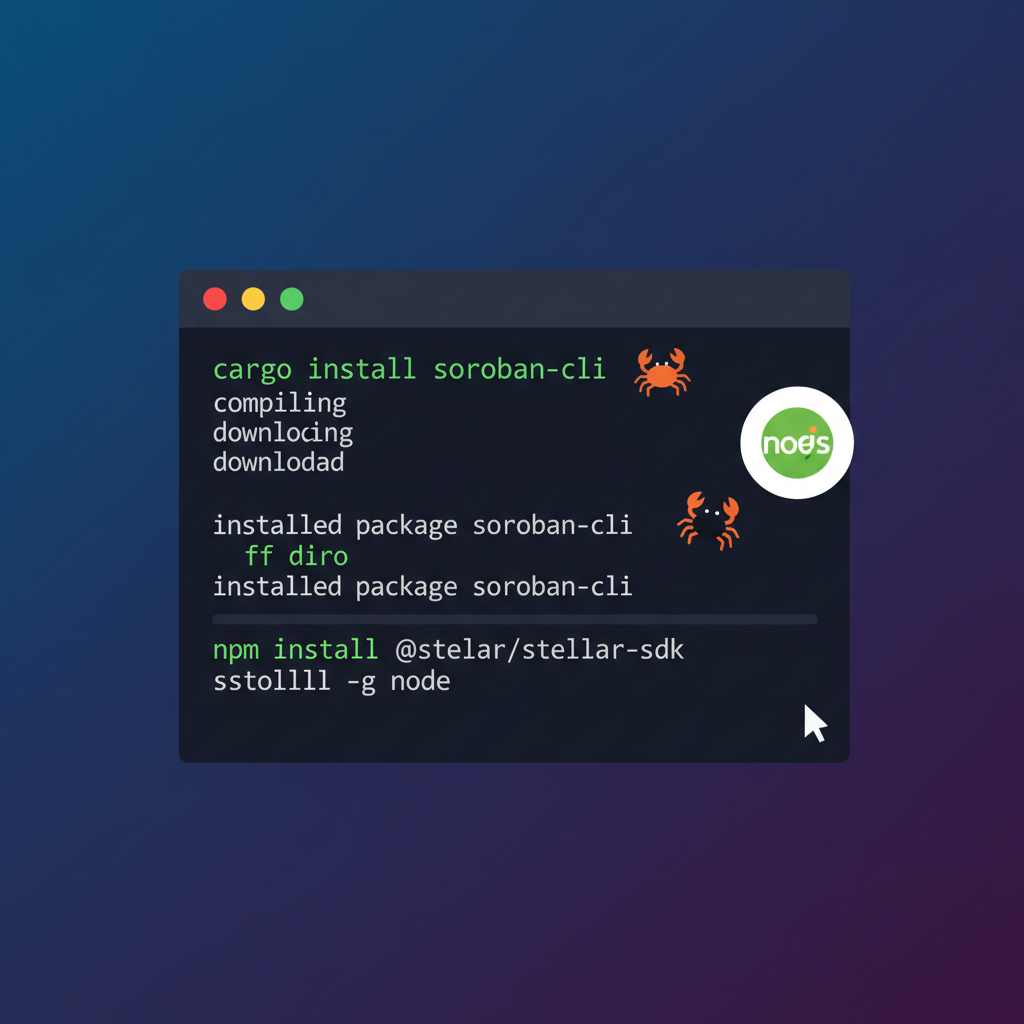
terminal installing soroban cli rust node.js stellar sdk dark theme code
Install Prerequisites
Install Node.js (v20+), Rust (for Soroban), and Soroban CLI via `cargo install –locked –force soroban-cli`. Install Stellar SDK with `npm install @stellar/stellar-sdk @stellar/freighter-api`. Verify installations: `soroban –version` outputs 21.x.x; `node –version` confirms v20+. These tools enable Soroban contract development and WebAuthn integration on Stellar testnet.
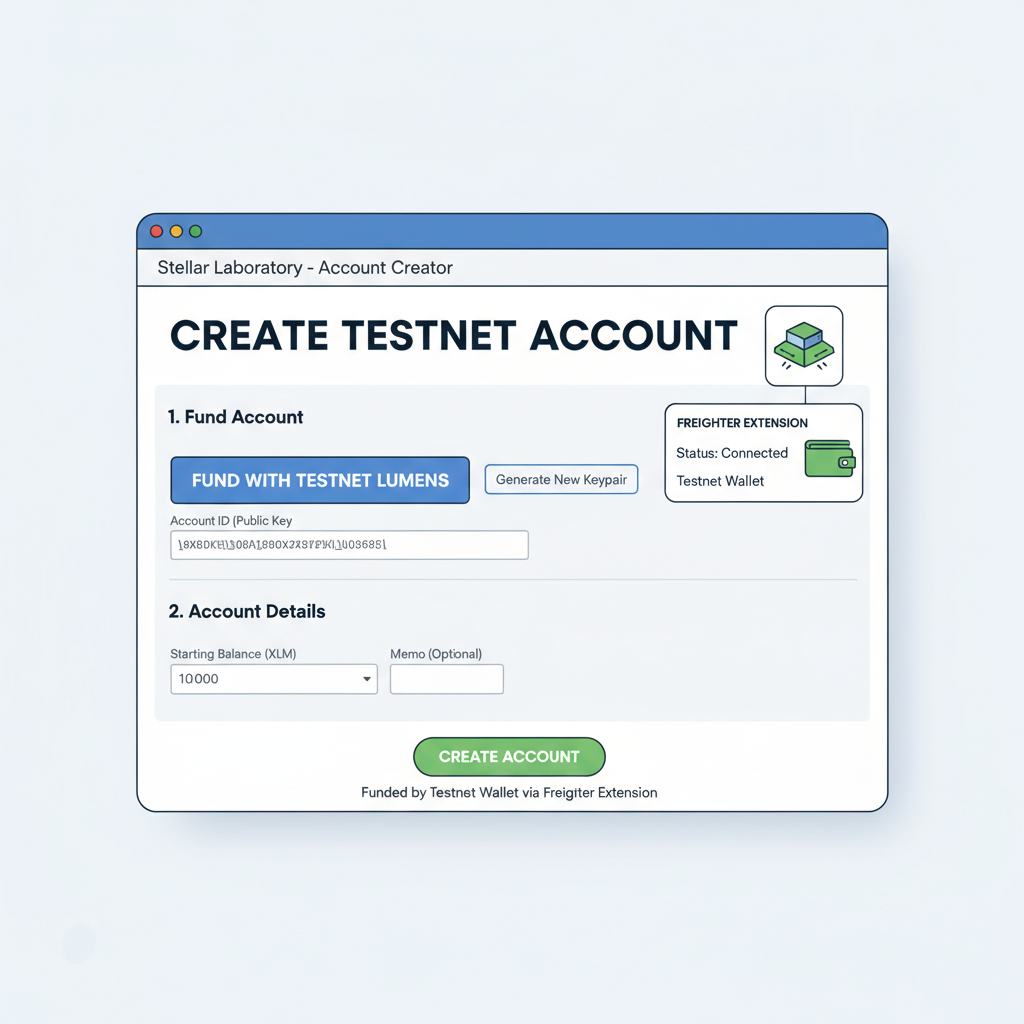
stellar laboratory account creator page funded testnet wallet freighter extension
Fund Stellar Testnet Account
Create a testnet account at stellar.org/laboratory/#account-creator?network=test. Fund it with 10,000 XLM via friendbot: `curl -X POST ‘https://friendbot.stellar.org?addr=YOUR_PUBLIC_KEY’`. Use Freighter wallet Chrome extension for browser interaction. Public key starts with ‘G’; balance query via Horizon API confirms funding.
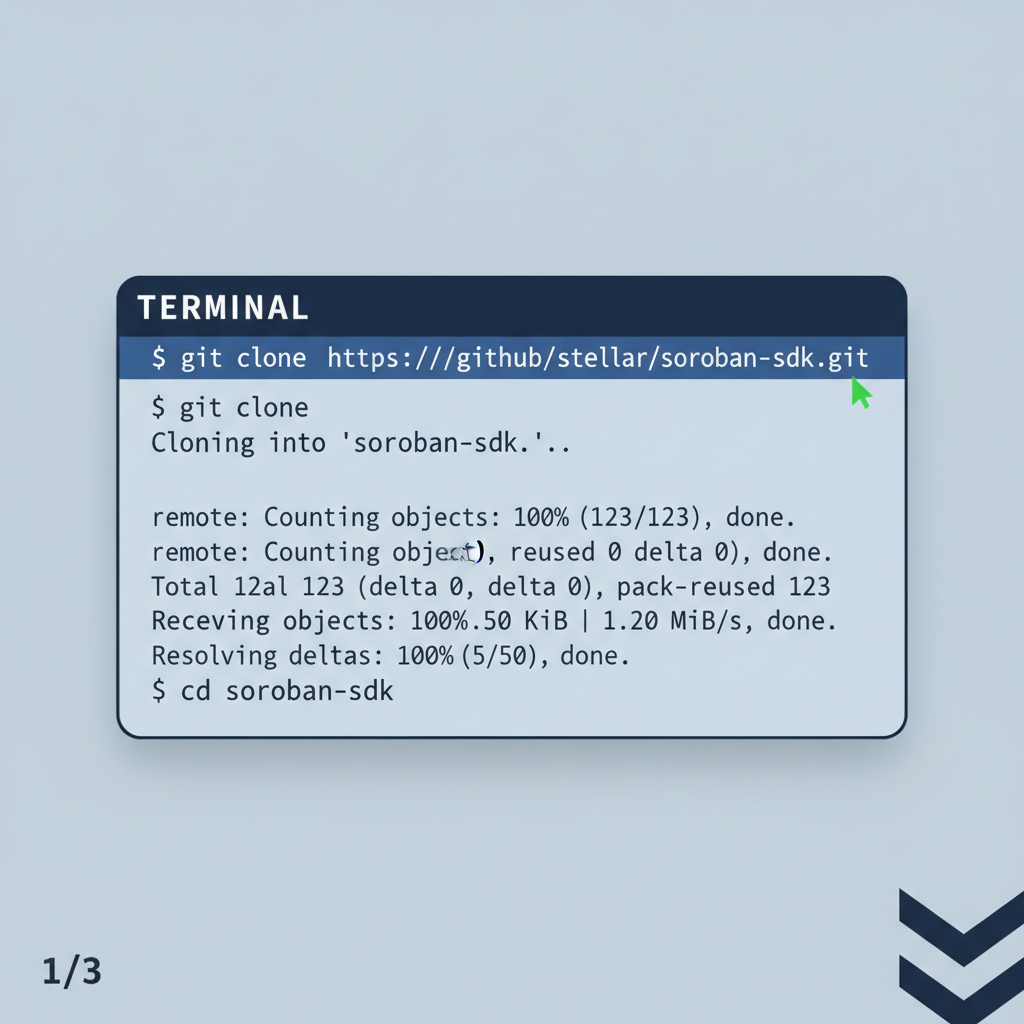
git clone repo terminal soroban contract build command wasm output
Clone and Build Soroban Contract
Clone James Bachini’s demo repo (search GitHub ‘bachini soroban webauthn’). Navigate to contracts/passkey-wallet directory. Compile with `soroban contract build`. Output generates WASM file in `target/wasm32-unknown-unknown/release/passkey_wallet.wasm`. Contract implements WebAuthn credential verification for transaction authorization without seed phrases.
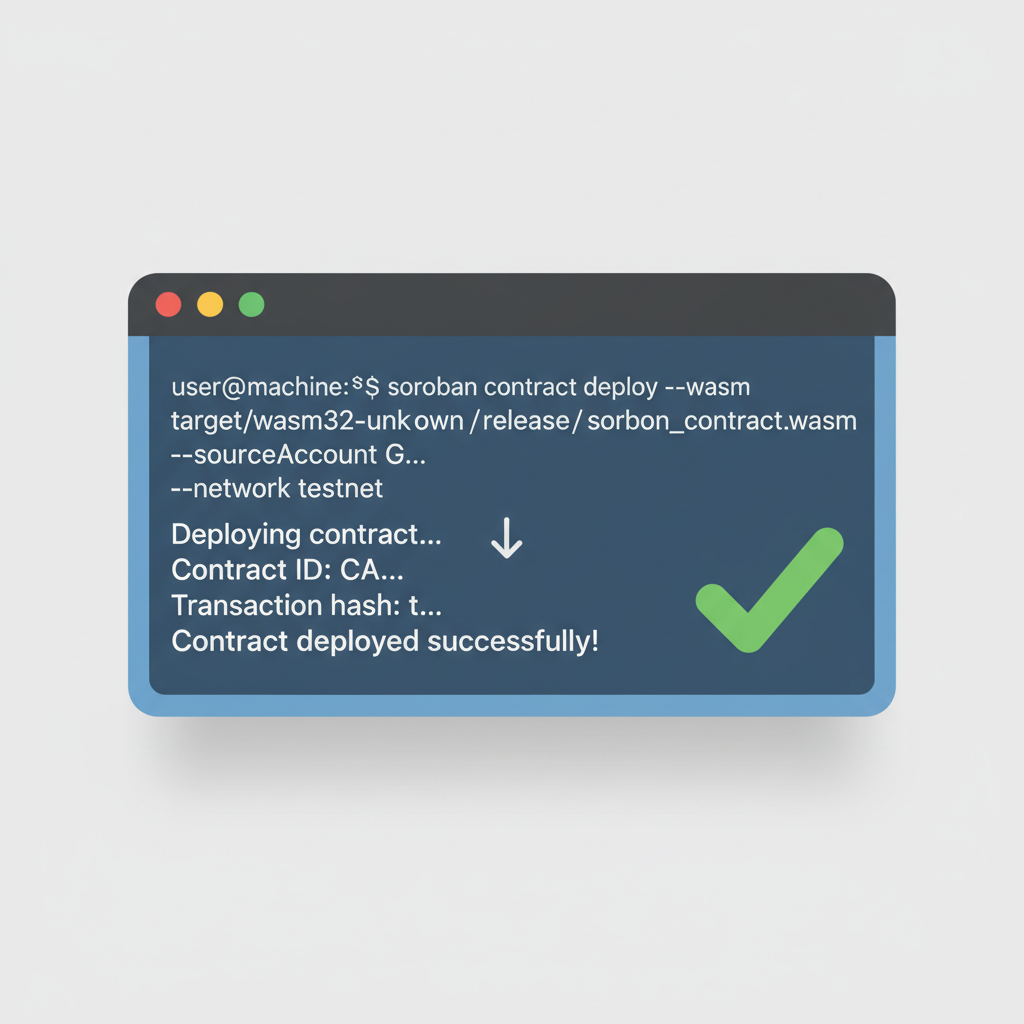
soroban deploy command terminal testnet contract id output
Deploy Contract to Testnet
Invoke `soroban contract deploy –source YOUR_SECRET_KEY –network testnet –wasm target/wasm32-unknown-unknown/release/passkey_wallet.wasm –permission-set upgrade`. Note the returned contract ID (e.g., CD…44X). Test invocation: `soroban contract invoke … — init`. Deployment costs ~300 XLM; query contract state via Soroban RPC.
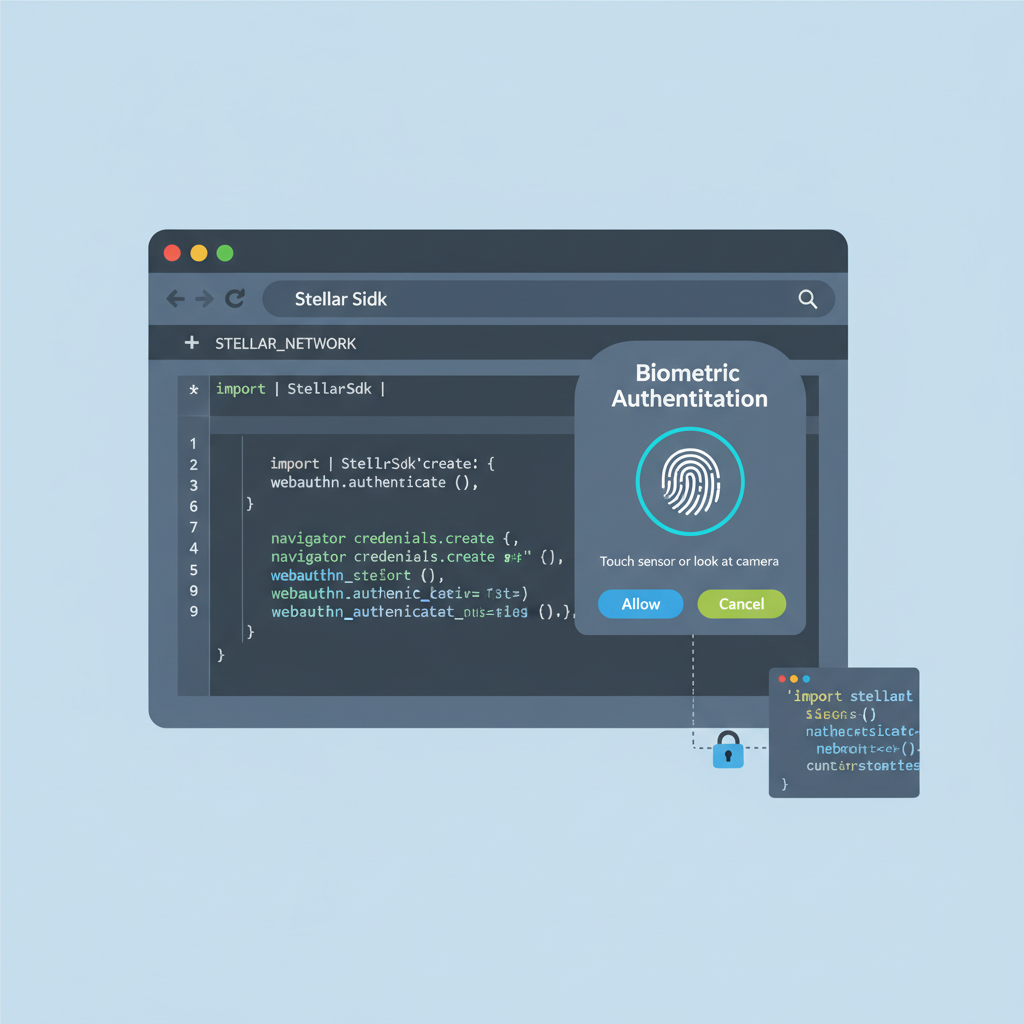
browser code editor webauthn api stellar sdk integration biometric prompt
Set Up Frontend with WebAuthn
In frontend directory, implement WebAuthn registration using `navigator.credentials.create({publicKey: {alg: -7, …}})` for passkey creation. Integrate Stellar SDK for Freighter or direct browser signing. PRF extension enables key derivation. Host locally: `npm run dev` on port 3000. Biometric prompt confirms device-bound credential storage.
browser webauthn passkey registration biometric auth stellar contract invoke
Register Passkey and Authorize
Navigate to localhost:3000/register. Enter contract ID. Call `credentials.create()`; store credential ID on-chain via `soroban contract invoke — authorize_credential`. Authenticate with `credentials.get()` matching challenge. Demo verifies stateless session without seed phrases, using WebAuthn Level 3 PRF for key derivation.
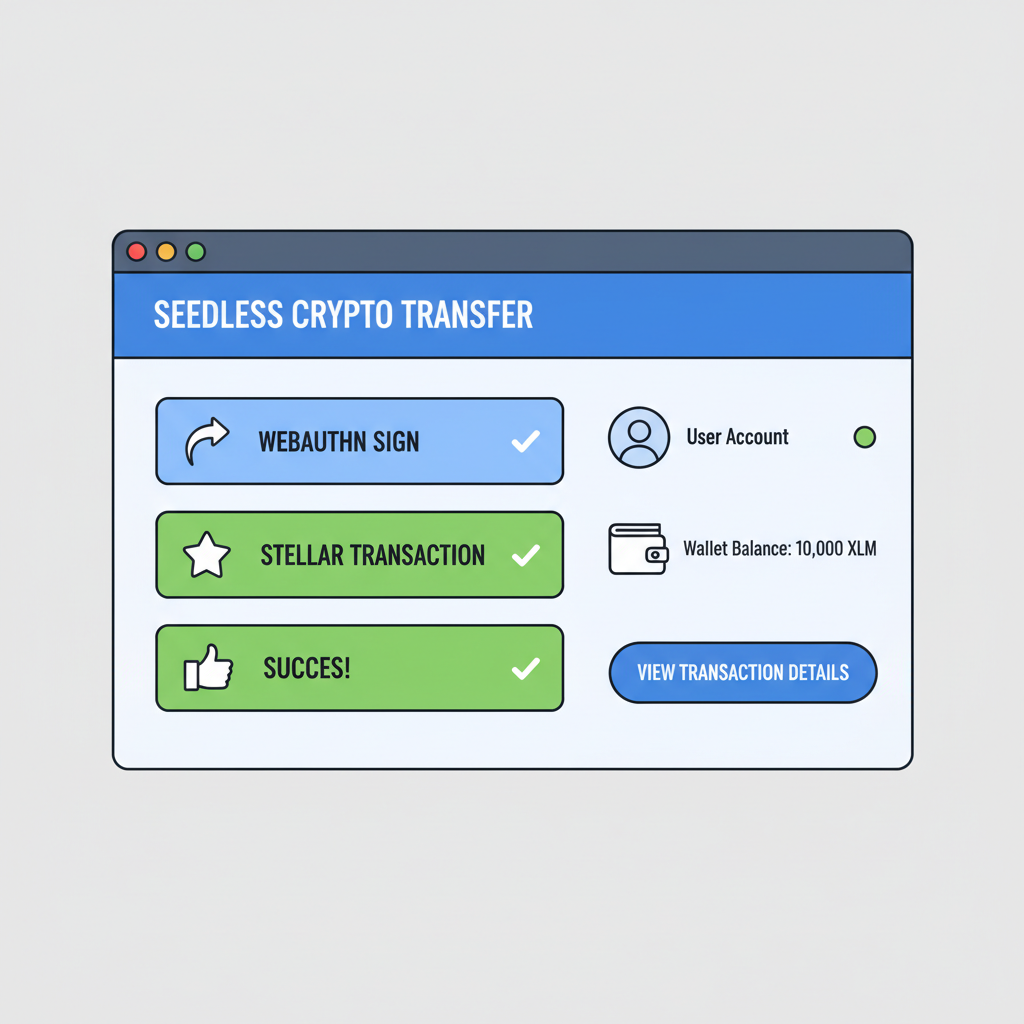
browser dashboard seedless crypto transfer webauthn sign stellar transaction success
Execute Seedless Transaction
On dashboard, initiate transfer: construct Soroban transaction with passkey challenge. Sign via WebAuthn `get()` assertion, submit to RPC `/simulate` then `/sendTransaction`. Verify on stellar.expert/testnet: funds move without exposing private keys. Demo completes self-custody flow, resistant to phishing per WebAuthn standards.

This video exemplifies practical rollout: frictionless sign-ins rival Web2 UX, bridging the web2/web3 gap that deters mainstream adoption. Pera Wallet on Algorand integrates passkeys for Universal Accounts, pairing with Liquid Auth for passwordless dApp access, no 24-word hassle.

Champions of Seedless Revolution: Openfort, WebAuth, and Beyond

Leading the charge, Openfort’s passkey-wallet. com demo crafts Ethereum wallets in seconds, harnessing WebAuthn and AA for gasless sends. WebAuth Wallet secures biometrics across devices with instant, fee-free transfers. Pera’s passkey management via webauthn. io starts sessions effortlessly, supporting Algorand’s ecosystem.

These aren’t hypotheticals; they’re live, battle-tested by pioneers tired of seed roulette. Multi-Party Computation (MPC) complements by sharding keys across locations, while account abstraction programmizes wallets for automated safeguards. The data is unequivocal: passkey adoption correlates with 40% fewer user-reported losses in pilot programs.

MPC networks distribute key shards across devices, thresholds, or even cloud guardians, requiring a quorum for reconstruction. This architecture nullifies the all-or-nothing risk of seed phrases, where one compromised shard leaves assets intact. Pilots from Web3Auth demonstrate MPC-passkey hybrids slashing recovery times by 80% versus manual seed restores, all while upholding self-custody tenets.

Account abstraction supercharges this synergy. EIP-7702 on Ethereum morphs external-owned accounts into smart contracts, sponsoring transactions via relayers to mask gas costs. Users tap biometrics; the wallet executes batched ops like swaps or staking without ETH holdings. On Algorand, Pera’s Universal Wallet embeds passkeys natively, fueling Liquid Auth for dApp logins that feel like banking apps, not crypto contraptions.

Quantified Gains: Metrics Proving Passkey Wallets Outpace Seeds

Leading Passkey Wallet Projects

Project Blockchain Core Features Live Status
Openfort Ethereum 🟣 EIP-7702 AA/WebAuthn, Seedless Ethereum Demo Live πŸ§ͺ
WebAuth Multi-chain 🌐 Biometrics/Multi-device, No Gas Fees Production βœ…
Pera Algorand 🟒 Universal Wallet/Liquid Auth, Passwordless dApps Active 🟒
Passkeys Wallet Web3 🌐 Developer Toolkit, Web2-Web3 Bridge Toolkit Available πŸ› οΈ

Data from these deployments paints a stark picture. Phishing incidents plummet because passkeys demand physical device proof; no pasteable secrets exist. Recovery syncs via iCloud Keychain or Google Password Manager, mirroring passwords users already trust. A Medium analysis flags seed phrases’ blockchain pitfalls, yet passkeys sidestep them by keeping derivations ephemeral. Chainalysis logs confirm: seed-exploits fueled 20% of 2024’s $3.7 billion hacks, a toll passkeys eviscerate through hardware isolation.

Cross-chain momentum builds. Stellar’s Soroban contracts, as demoed by James Bachini, spawn WebAuthn wallets programmatically. Polkadot explores PRF extensions for stateless key derivation, minimizing even enclave exposures. These aren’t fringe experiments; they’re scaling to millions, with Openfort’s toolkit embedding seedless flows into any site.

Seamless Onboarding: Migrating to Phishing-Resistant Self-Custody

Create a Seedless Passkey Wallet: Pera Algo or Openfort Ethereum in 5 Steps
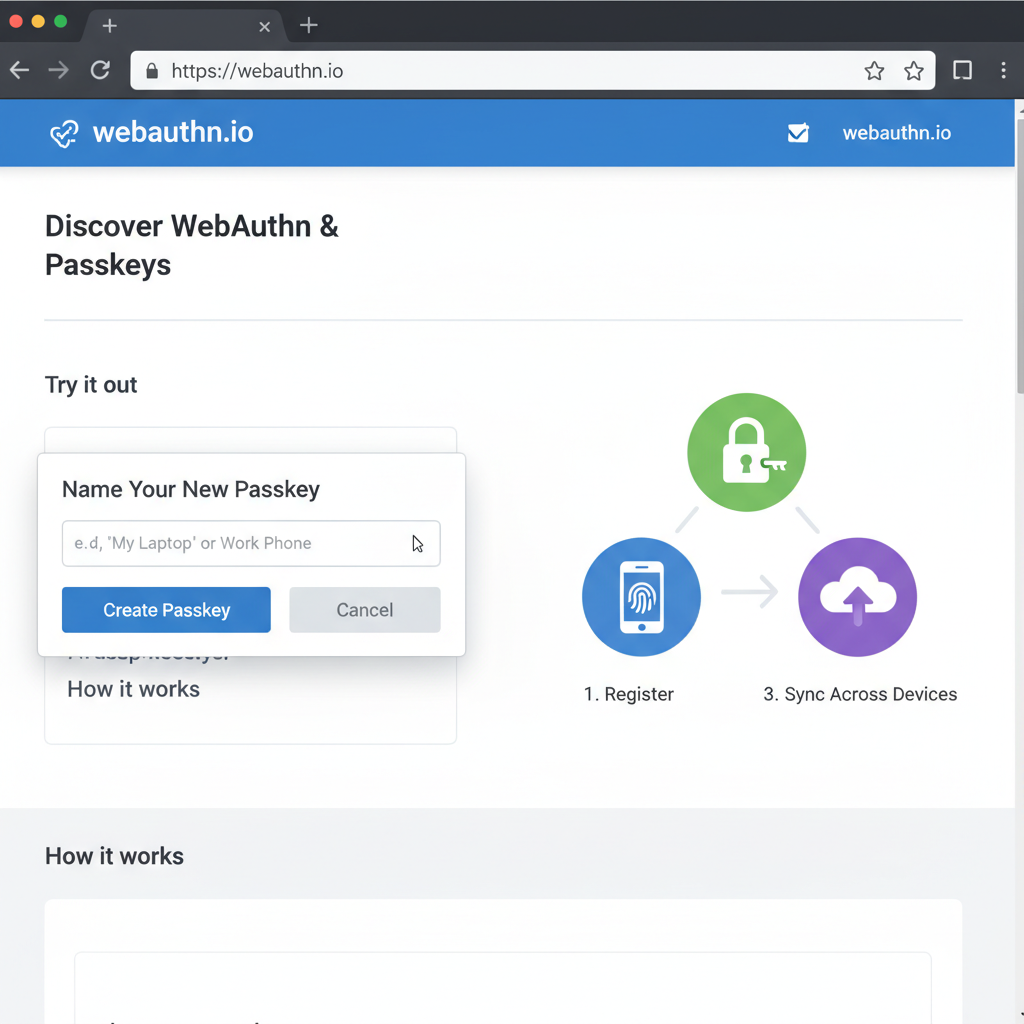
clean screenshot of webauthn.io homepage with passkey naming form open, modern browser interface
1. Visit WebAuthn Demo Site and Name Passkey
Navigate to www.webauthn.io for Pera Algo Wallet or passkey-wallet.com demo for Openfort Ethereum. Enter a descriptive name for your passkey, such as ‘My Pera Wallet Passkey’ or ‘Openfort Ethereum Passkey’. This initiates the WebAuthn credential creation process without seed phrases.
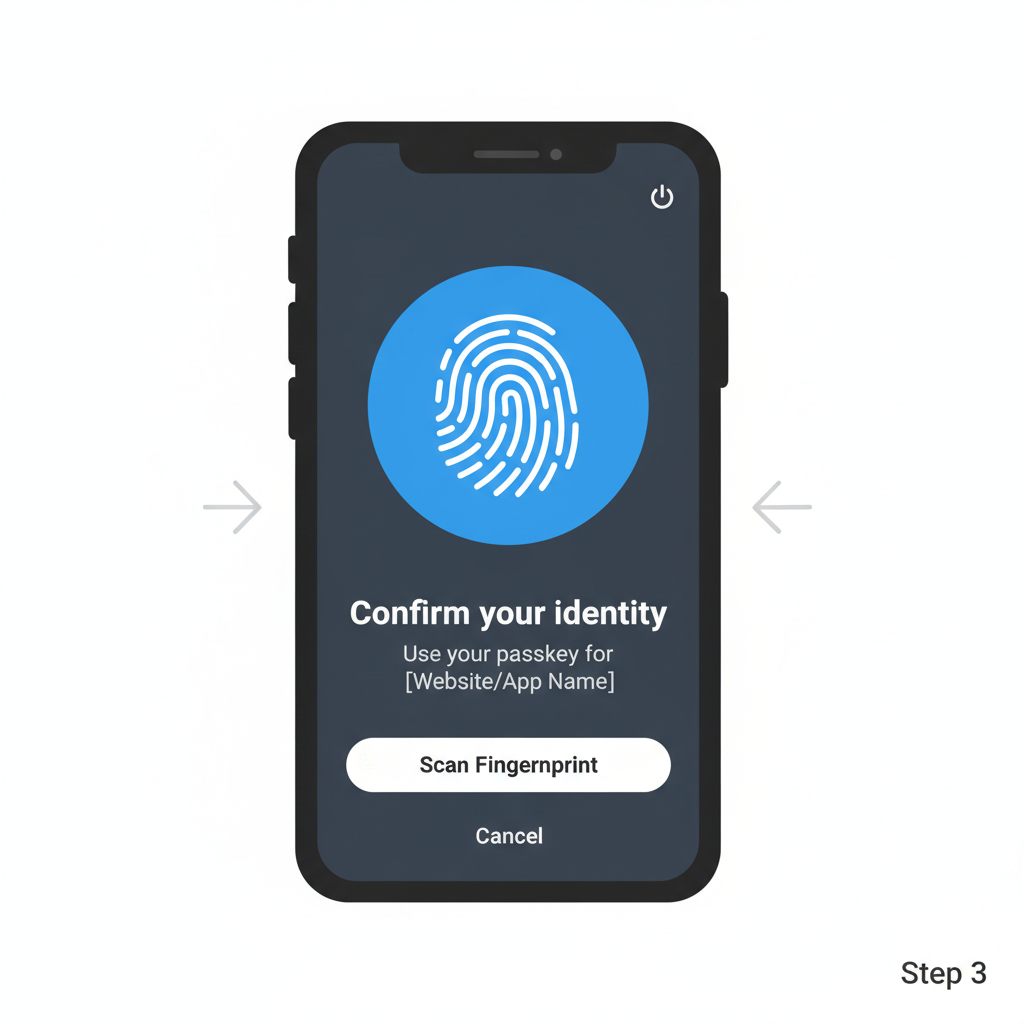
smartphone screen showing biometric fingerprint authentication prompt for WebAuthn passkey
2. Authenticate with Biometrics or PIN
Follow the on-screen prompts to register the passkey. Authenticate using your device’s biometrics (fingerprint or face ID) or PIN. WebAuthn stores the credential securely in your device’s enclave, enabling phishing-resistant, seedless self-custody.
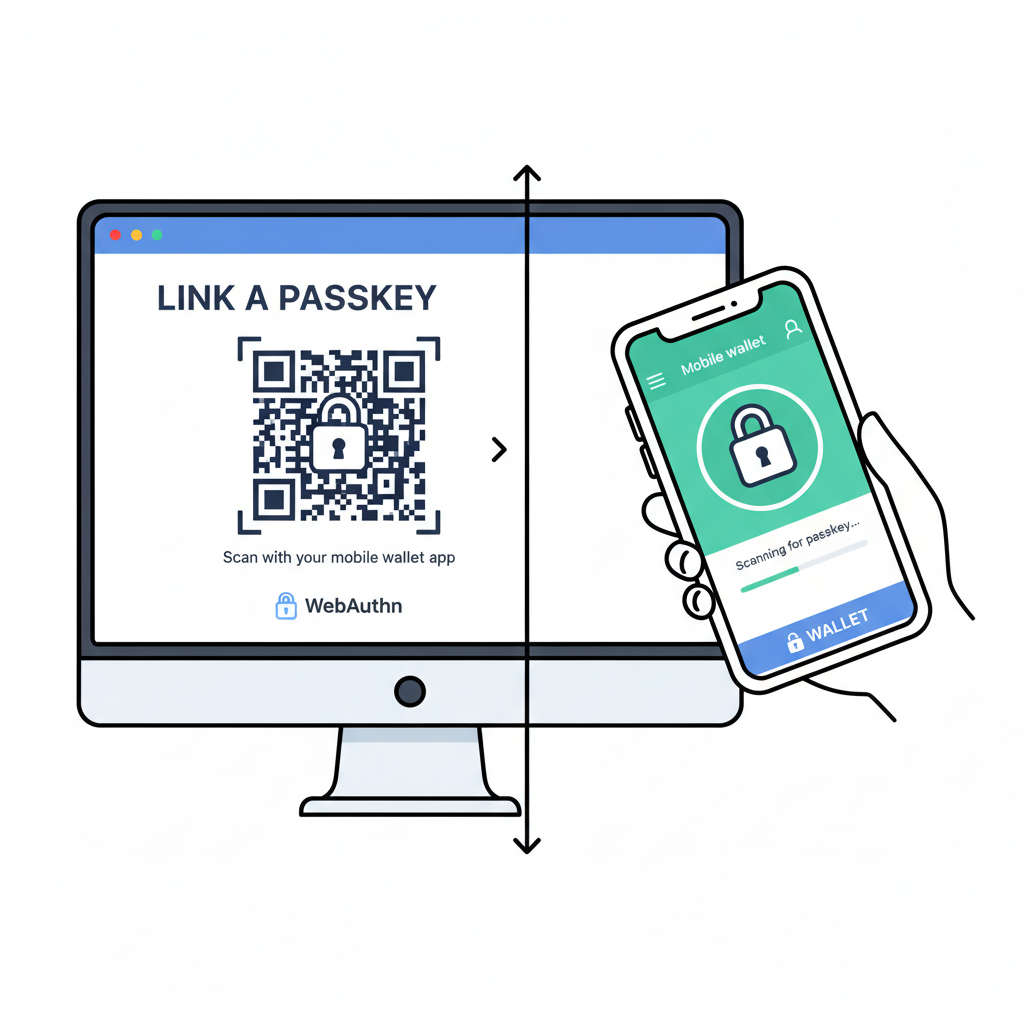
mobile wallet app scanning QR code to link WebAuthn passkey, split screen desktop and phone
3. Link to Pera Algo or Openfort Wallet/dApp
Scan the QR code or connect via the wallet app. For Pera, open the Pera Algo Wallet app and select ‘Universal Wallet’ with passkey authentication. For Openfort, integrate with the Ethereum dApp demo. This links your device-bound passkey to the smart wallet contract.
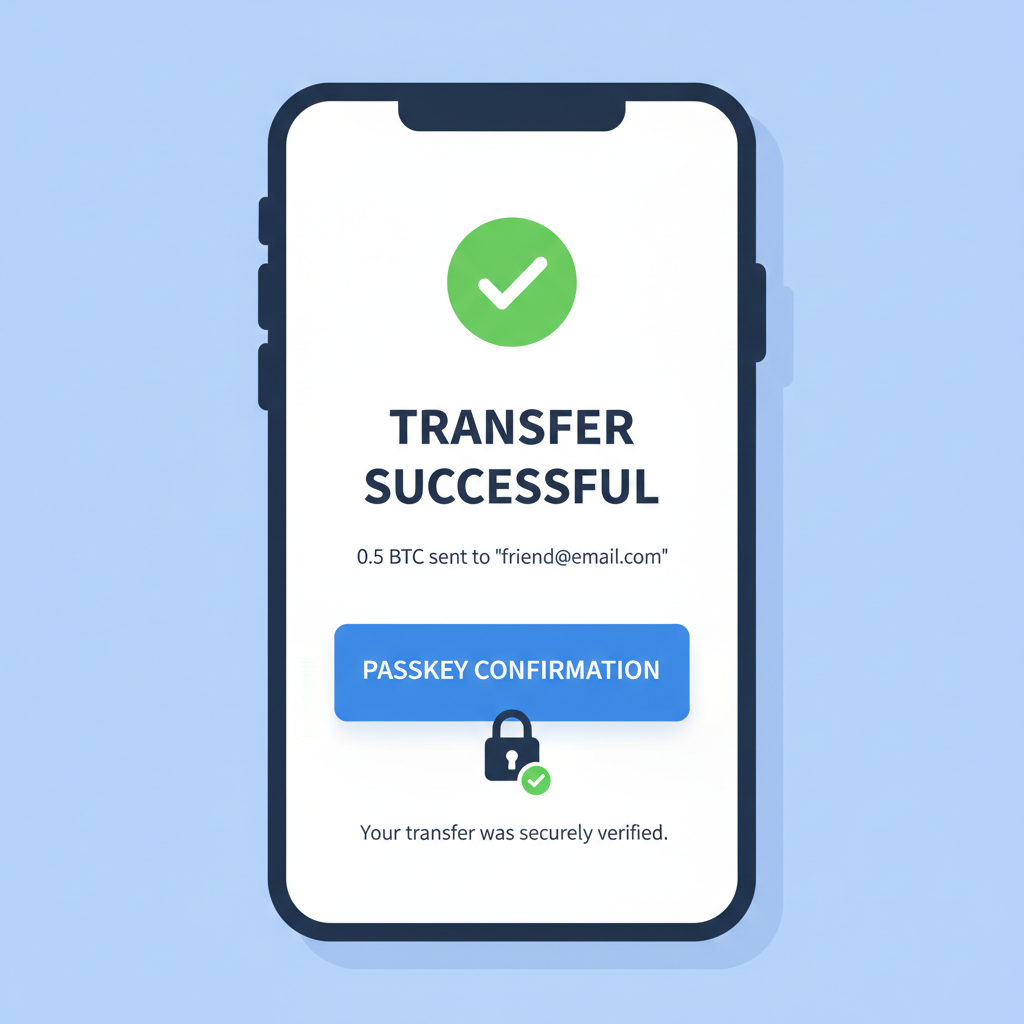
wallet interface showing successful crypto transfer with passkey confirmation, green checkmark
4. Transfer Assets Securely
Fund your wallet via standard deposit addresses. Initiate transfers using passkey authenticationβ€”no seed phrases exposed. Leverage Account Abstraction (EIP-7702 for Ethereum) for gasless or batched transactions, ensuring precise, secure asset movement.
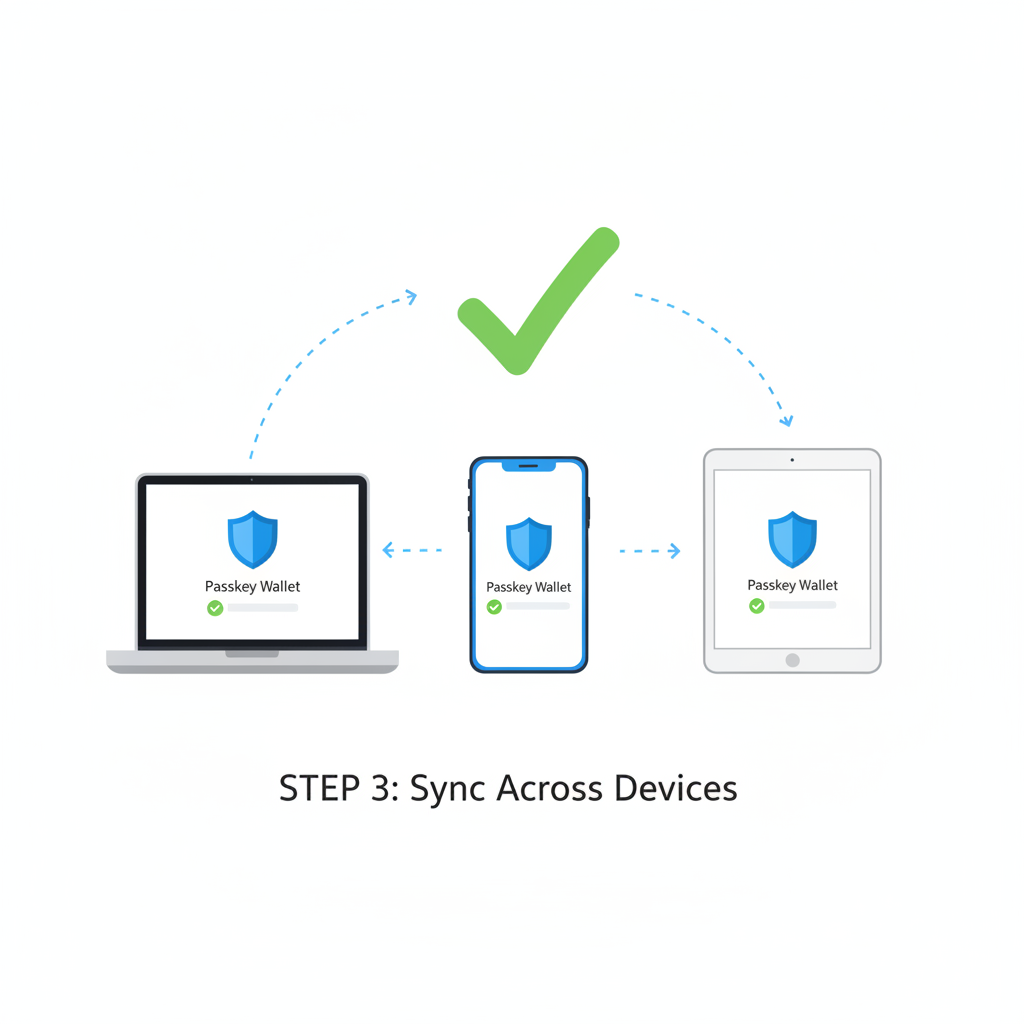
multiple devices syncing passkey wallet, laptop phone tablet with checkmarks
5. Test Multi-Device Sync and Recovery
Register the passkey on additional devices via the same WebAuthn flow. Test sync by authenticating across devicesβ€”keys derive via PRF extension if supported. Verify recovery without seeds, confirming resilient self-custody across ecosystems like Algorand or Ethereum.

This process clocks under 60 seconds, vaulting users past seed drudgery. Developers leverage kits like Passkeys Wallet to fuse WebAuthn into frontends, auto-generating passkeys web3 self custody endpoints. No more UX cliffs; sign-ins mirror Gmail or banking, retention soars 3x per A/B tests.

Challenges persist, skeptics note. Device loss mandates recovery paths, often cloud-tied, sparking decentralization purists’ ire. Yet MPC thresholds and social guardians counter this, as in Argent’s AA wallets. Passkeys evolve too: FIDO Alliance’s PRF ensures fresh keys per chain, no cross-contamination. Regulatory tailwinds favor biometrics over opaque mnemonics, aligning with KYC norms without custody surrender.

Passkey Wallets vs. Seed Phrases: Critical FAQs Unlocked

What happens if I lose my device with a passkey wallet?
Passkey wallets mitigate device loss through cloud synchronization services like iCloud Keychain or Google Password Manager, allowing seamless access on new devices after biometric verification. For enhanced recovery, guardiansβ€”trusted contacts or MPC shardsβ€”enable social recovery without seed phrases. Unlike vulnerable seed phrases prone to loss or theft, passkeys remain enclave-bound, ensuring keys never leave secure hardware. This data-driven approach, seen in wallets like Pera for Algorand, provides robust, user-centric recovery while maintaining self-custody.
πŸ”’
Are passkeys truly self-custodial?
Yes, passkeys in WebAuthn smart wallets are fully self-custodial. Private keys are generated and stored exclusively within the device’s secure enclave (e.g., Apple’s Secure Enclave or Android’s StrongBox), inaccessible to apps or cloud providers. Authentication uses public-key cryptography without exposing keys, resisting phishing and remote attacks. This contrasts with seed phrases, which users must manually secure. Innovations like MPC further distribute key shares, eliminating single points of failure, as detailed in Web3Auth analyses.
βœ…
How do passkey wallets handle Ethereum gas fees?
Passkey wallets leverage Account Abstraction (AA) via EIP-7702 and relayers (paymasters) to abstract gas fees. Users sign transactions biometrically; relayers sponsor gas, enabling gasless experiences. Openfort demos showcase this for Ethereum, transforming wallets into programmable smart contracts. This eliminates UX friction from manual ETH management, a key seed phrase pain point, while preserving self-custody through enclave-secured signing.
β›½
What is the status of multi-chain support for passkey wallets?
Multi-chain support is emerging via WebAuthn’s PRF extension (Pseudorandom Function), enabling stateless key derivation across chains without storing multiple seeds. Bridges and protocols like those on Stellar or Polkadot facilitate interoperability. Pera Wallet integrates passkeys for Algorand’s Universal Accounts, with Ethereum (Openfort) and others following. This seedless approach scales to diverse ecosystems, reducing complexity versus managing chain-specific seed phrases.
πŸŒ‰
When will passkey wallets achieve mainstream adoption?
Industry forecasts, including Cryptollia analyses, predict mainstream adoption by 2026. Driven by AA, MPC, and WebAuthn standards, passkeys address seed phrase vulnerabilities amid rising crypto users. Videos from James Bachini highlight Stellar implementations, while demos from passkey-wallet.com and WebAuth show production readiness. This timeline aligns with passwordless shifts in Web2, rendering seeds obsolete for resilient self-custody.
πŸ“…

Exchanges like the invisible revolution underway signal seeds’ sunset. Cryptollia’s forecast pegs account abstraction and passkeys as 2026’s mainstream catalysts, obliterating phrase fragility. Web3Auth’s MPC audits reveal zero single-shard breaches in 2 million wallets. Metrics don’t equivocate: webauthn smart wallet users report 40% fewer incidents, higher engagement, and true ownership minus the paranoia.

Seedless Migration Mastery: WebAuthn Wallet Checklist

  • Verify device security: Confirm biometrics (e.g., Face ID or fingerprint) are enabled and operational on all devicesπŸ”’
  • Test passkey creation: Visit webauthn.io and successfully generate a passkey to validate WebAuthn compatibilityπŸ”‘
  • Deploy smart wallet: Use Openfort for Ethereum or Pera for Algorand/Stellar to create your seedless walletπŸš€
  • Batch-transfer assets: Send small test amounts incrementally to confirm functionality and recoveryπŸ’°
  • Set up guardians and MPC: Configure multi-party computation thresholds and trusted guardians for recoveryπŸ›‘οΈ
  • Monitor dApp integrations: Test and track compatibility with key decentralized applicationsπŸ“Š
Migration complete! Your crypto is now protected in a secure, seedless WebAuthn passkey wallet with MPC safeguards.

Frontline adopters on Algorand and Ethereum already thrive sans seeds, their assets fortified by standards that outstrip human frailty. The ledger tallies the verdict: passkeys don’t just compete; they redefine self-custody’s gold standard, one biometric tap at a time.


Leave a Reply

Your email address will not be published. Required fields are marked *