

In the volatile world of cryptocurrency, self-custody remains the gold standard for those seeking true ownership of their digital assets. Yet, the traditional seed phrase model-12 to 24 seemingly random words scribbled on paper-has long been a thorn in the side of even seasoned investors. One misplaced word, a phishing scam, or a house fire, and poof: your portfolio vanishes forever. Enter WebAuthn passkey wallets, a breed of seedless crypto wallets promising to replace these fragile mnemonics with biometric-secured, phishing-resistant authentication. As a CFA charterholder with years navigating asset management pitfalls, I approach this shift with measured optimism; the technology shows promise, but it's not without its caveats.
The Persistent Vulnerabilities of Seed Phrases
Seed phrases emerged as the decentralized antidote to centralized custody risks, granting users sole control via hierarchical deterministic wallets. Sounds empowering, right? In practice, it's a recipe for disaster. Statistics from wallet recovery services suggest that over 20% of Bitcoin remains lost forever due to forgotten or compromised seeds. Users must guard these phrases like Fort Knox, yet human error prevails: backups degrade, phrases get entered into malicious sites, or they're stolen in bulk from cloud-stored images.
Phishing attacks exploit this weakness ruthlessly. Scammers pose as support teams, tricking users into revealing seeds under false pretenses. Once exposed, funds drain instantly-no two-factor authentication to save the day. For conservative investors like myself, who prioritize capital preservation, this single point of failure clashes with diversification principles. Why bet your nest egg on memorization when better tools exist?
Key Differences: Seed Phrases vs WebAuthn Passkeys
| Aspect | Seed Phrases | WebAuthn Passkeys |
|---|---|---|
| Security | Vulnerable to phishing (users tricked into revealing words) | Phishing-resistant (biometric/device-bound keys never leave device) |
| Recovery | Manual backup (12-24 words to store securely) | Multi-device sync (e.g., iCloud Keychain, cross-platform recovery) |
| Usability | Complex (memorize/manage words) | Simple biometric (fingerprint, face ID, PIN) |
| Risks | Loss/theft = permanent, irreversible fund loss | Device failure (mitigated by recovery tools like multisig or social recovery) |
Decoding WebAuthn Passkeys: A Technical Primer
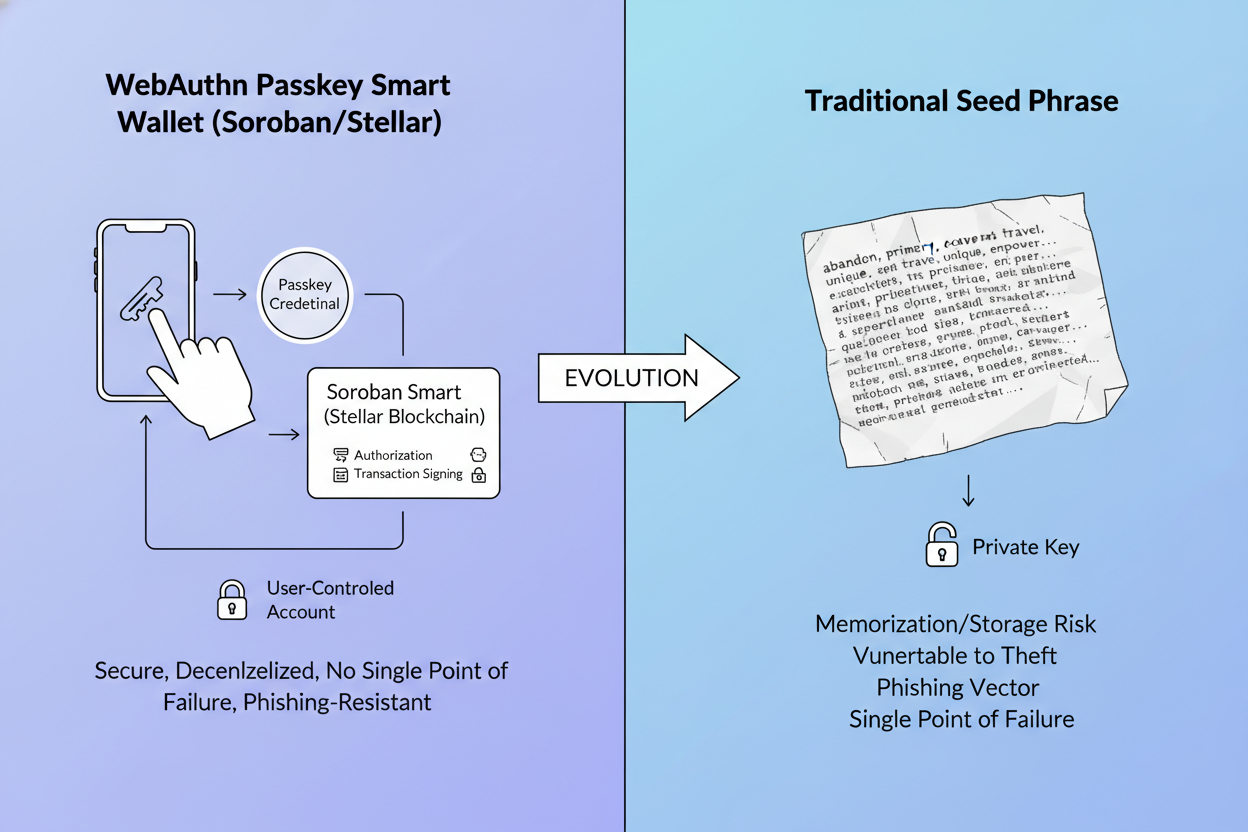
At its core, WebAuthn-the W3C standard powering passkeys-leverages public-key cryptography via the FIDO2 protocol. When you create a WebAuthn passkey wallet, your device generates a unique key pair. The public key registers with the wallet service or blockchain, while the private key stays locked in the device's secure enclave, accessible only via biometrics like Face ID or fingerprint. No seed to jot down, no passphrase to forget.
This setup renders traditional phishing obsolete. Attackers can't phish what never leaves your hardware. Transactions sign cryptographically without exposing keys, mimicking hardware wallets but with seamless multi-device sync across your ecosystem-Apple, Android, or browsers. Recent integrations, like Para's Embedded Wallet SDK, enable instant onboarding on chains such as Solana, proving passkeys replace seed phrases without sacrificing sovereignty.
Caution tempers enthusiasm, however. Passkeys bind to devices, so a total loss of all synced gadgets could lock you out absent robust recovery. Implementations vary; weak hardware security modules undermine the model. Still, for self-custody without seeds, it's a leap forward.
Examining Leading WebAuthn Passkey Wallets in Action
Products like WebAuth Wallet exemplify the trend. This non-custodial mobile app secures private keys with biometrics, supports chains from Ethereum to XPR Network, and skips gas fees for instant transfers. Users add multiple devices effortlessly, distributing risk without seed sharing. Passkeys Wallet takes it further: fund directly on-site, no extensions or emails required.
Bitkey by Block introduces a hybrid multisig twist-two-of-three keys, with users controlling two via app and hardware, Block holding the third inert without consent. Web3Auth layers passkeys atop its MPC infrastructure for biometric wallet access. These aren't hypotheticals; they're live, addressing seedless recovery via social guardians or on-chain logic.
Community sentiment echoes cautious adoption. Reddit threads debate keyless on-chain passkeys with built-in 2FA, while analyses like Mitosis University's probe seedless risks versus rewards.

These discussions reveal a growing consensus: phishing resistant crypto wallets like these could onboard the next wave of users weary of seed phrase roulette. Yet, as someone who's seen portfolios evaporate from overlooked risks, I insist on dissecting recovery-the Achilles' heel that could undo seedless gains.
Recovery Realities: Beyond the Seedless Hype
Seed phrases offer a brute-force fallback: enter the words anywhere, anytime. Passkeys flip this script, syncing across devices via cloud-encrypted credentials tied to your Apple ID or Google account. Lose your phone? Authenticate on a new one, and keys reconstruct securely. WebAuth Wallet shines here, letting users add devices biometrically without exposing secrets. Passkeys Wallet streamlines funding sans verification hurdles, while proposals like Praveen Perera's WebAuthn PRF for Bitcoin backups hint at universal, serverless recovery.
Bhagya Rana's Medium piece outlines five seedless models, with passkey-based atop the list for its 2025-ready simplicity. Social recovery guardians approve transactions during disputes; on-chain multisig, as in Bitkey's setup, demands multiple approvals. Para's SDK persists sessions device-bound yet recoverable, and Web3Auth blends passkeys with MPC for distributed key sharding. These mechanisms diversify risk, aligning with my mantra of never putting all eggs in one basket.
Still, pitfalls lurk. Device ecosystems must align-iOS to Android sync isn't flawless. Hardware failures or coerced biometrics (think border agents) demand contingency plans. Mitosis University's analysis warns of implementation flaws turning innovation into liability; a buggy secure enclave equals a digital paperweight. Conservative strategy demands testing recovery flows before committing capital.
For self-custody without seeds, the math favors passkeys when executed well. No more 20-word brainteasers; biometrics cut error rates dramatically. XPR Network's best practices reinforce this: keys stay device-local, non-custodial by design. Milk Road's WebAuth review praises multi-chain support, from Ethereum to exotics like Metal L2, all gas-free.
Weighing the Trade-offs: A Balanced Verdict
Stack them side-by-side, and passkeys dominate usability. Seeds demand vigilant stewardship; passkeys automate security via hardware roots of trust. Phishing? Seeds surrender to social engineering; passkeys laugh it off, as private keys never traverse networks. Adoption accelerates on Solana and Stellar, with James Bachini's Soroban demos paving smart wallet paths.
Yet caution reigns. Seed phrases, for all flaws, grant universal portability-no ecosystem lock-in. Passkeys hinge on platform support; a browser update or policy shift could snag access. Reddit's Solana crowd ponders 2FA integration, but true keylessness invites quantum concerns long-term. My portfolio lens prioritizes preservation: allocate modestly to seedless trials, keep battle-tested hardware wallets for core holdings.
Products evolve rapidly. WebAuth's App Store presence covers staking, trading across Optimism and beyond. Passkeys Wallet's web-native creation bypasses app stores entirely. Bitkey's multisig hybrid tempers centralization fears, proving hybrids bridge old and new. As crypto matures, expect standards like FIDO2 to harden, recovery to standardize via decentralized identifiers.
Stakeholders from developers to retirees stand to benefit, provided they audit implementations. Diversify authentication as you do assets; pair passkeys with shamir shares for ironclad backups. This isn't blind faith in tech-it's calculated evolution toward seedless crypto wallets that honor sovereignty without the sweat. Patience, as always, pays dividends.


No comments yet. Be the first to share your thoughts!